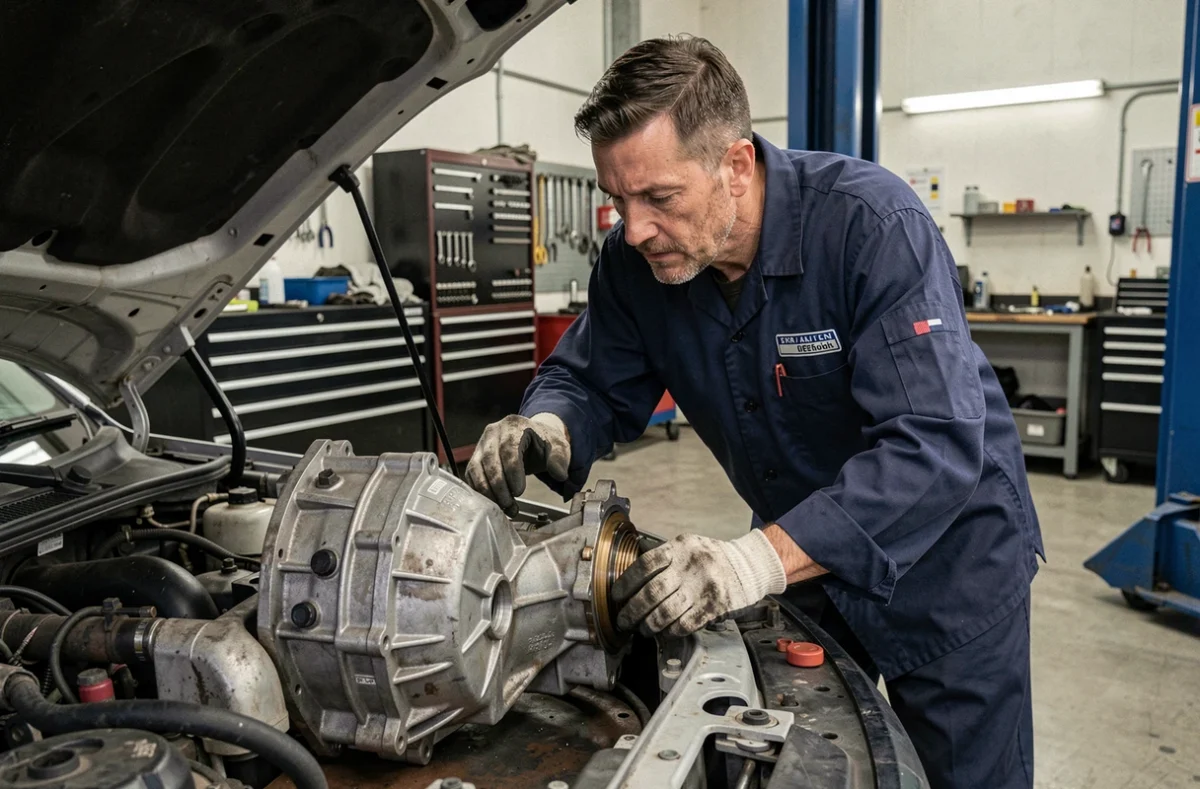
The EAT8 automatic transmission, manufactured by Aisin and installed on nearly all Peugeot, Citroën, DS, and Opel models since 2018, has accumulated feedback after several years of operation. The reported symptoms vary depending on the model year, type of engine paired, and mileage, making any generalization misleading. This article isolates the variables that distinguish a benign software issue from an expensive mechanical failure in the EAT8 transmission.
Classic EAT8 vs. e-EAT8 Hybrid: Two Transmissions, Two Failure Profiles
Grouping all EAT8s under one label skews the diagnosis. The e-EAT8 version, installed on plug-in hybrids (3008 Hybrid, 508 Hybrid, C5 Aircross Hybrid, DS7 E-Tense), incorporates an electric motor and specific software calibration that profoundly alters the transmission’s behavior.
| Criteria | Classic EAT8 (gas/diesel) | e-EAT8 (plug-in hybrid) |
|---|---|---|
| Architecture | Hydraulic converter + 8 gears | Converter + integrated electric motor + 8 gears |
| Common Symptoms | Jerkiness in 2nd/3rd gear, cold shuddering | Hesitations during thermal/electric transition, limp mode |
| Main Origin | Software mapping, degraded oil | Hybrid calibration, high voltage battery management |
| Most Affected Model Years | 2018-2019 | 2019-2023 (recall KBA 013819) |
| Typical Correction | ECU flash, preventive oil change | Hybrid software update, high voltage battery intervention |
This distinction is crucial at the time of diagnosis. A workshop treating an e-EAT8 like a classic EAT8 risks missing the true cause, especially regarding reports since 2023 concerning plug-in hybrid versions.
To delve deeper into common EAT8 transmission issues based on model years and engine types, documented manufacturer recalls provide useful insights.
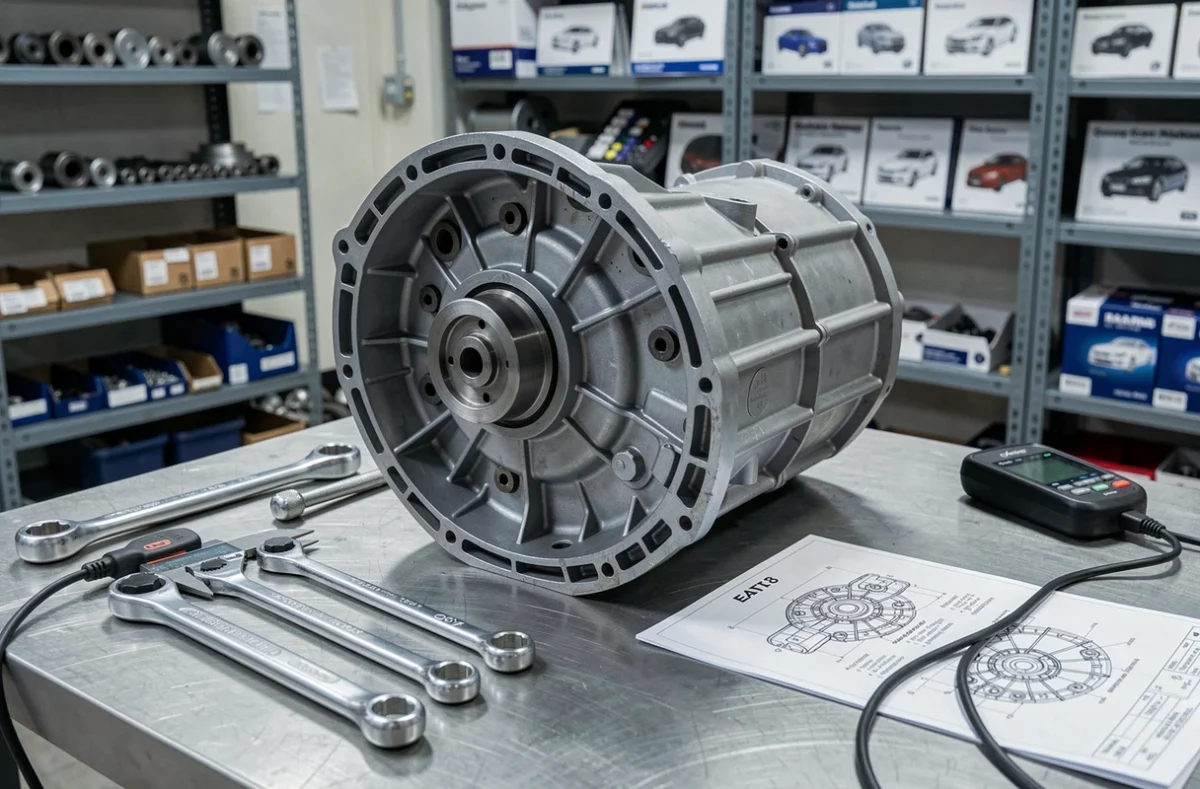
EAT8 Valve Body and Solenoids: The Hydraulic Circuit as a Point of Failure
Competitors extensively address shuddering and oil changes, but the hydraulic mechanism causing these symptoms deserves closer examination. The valve body of the EAT8 distributes hydraulic pressure to the internal clutches via solenoids. When the transmission oil becomes contaminated with metallic wear particles, these solenoids gradually clog.
A clogged solenoid alters the pressure during gear shifts, resulting in a noticeable jerk or slight slipping. The transmission control unit then detects a discrepancy between the commanded pressure and the actual pressure, potentially switching to limp mode.
Differentiating a Solenoid Issue from a Mapping Defect
Electronic diagnosis via the fault codes from the transmission control unit remains the only reliable way to determine the issue. A mapping defect generates reproducible shudders at specific RPMs, which disappear after an ECU flash. A clogged or failing solenoid produces random symptoms, often exacerbated when hot as the oil viscosity decreases.
- Fault code related to the pressure of a specific clutch: points to a solenoid or the valve body
- Fault code for gear synchronization: more likely indicates a mapping issue with the control unit
- No fault code despite shuddering: suspect degraded oil that has not yet triggered an alert threshold
Replacing a complete valve body represents a significant intervention. Cleaning or replacing the solenoids alone costs significantly less than a complete exchange, provided the diagnosis has correctly isolated the faulty component.
EAT8 Oil Change: What the Type of Oil and Chosen Interval Really Change
Stellantis describes the oil in the EAT8 transmission as “lifetime lubrication.” In practice, this formulation refers to the theoretical lifespan of the transmission under ideal conditions, not zero maintenance. A preventive oil change around 100,000 to 120,000 km significantly reduces the risks of solenoid clogging and degradation of the hydraulic converter.
Oil Reference and Filling Volume
The EAT8 uses a specific transmission oil referenced by Aisin. Using a generic “ATF compatible” oil without adhering to the exact standard alters the friction properties of the internal clutches. The volume of partial oil change (without disassembling the converter) only renews a fraction of the total lubricant, which explains why some workshops recommend a change in two passes spaced a few thousand kilometers apart.

KBA Recall 013819 on Stellantis Plug-in Hybrids: Scope and Consequences on the Transmission
In 2026, the German federal authority KBA recorded recall 013819 affecting approximately 180,198 plug-in hybrids from Peugeot, Opel, Citroën, and DS produced between 2019 and early 2023. The defect concerns the sealing of the high voltage battery housing, with a risk of corrosion and short circuit that could lead to fire.
This recall does not directly concern the e-EAT8 transmission itself. However, a malfunction of the high voltage battery disrupts the management of the electric motor integrated into the transmission, which can cause shifts into limp mode incorrectly attributed to the transmission.
- Affected owners receive a notice to visit a dealership for inspection and sealing of the housing
- A vehicle in limp mode after this recall must have the high voltage battery checked before any intervention on the transmission
- Confusing a high voltage battery defect with a transmission issue leads to unnecessary and costly repairs
EAT8 Diagnosis: Hierarchy of Checks Before Any Mechanical Intervention
Before incurring costs on the transmission, a logical sequence of checks allows for eliminating the least expensive causes first.
The first step remains reading the fault codes from the transmission control unit with a compatible tool (not a generic OBD reader, which often does not cover the specific codes for the Aisin transmission). The second step is to check if a software update is available for the control unit, as ECU flashes correct most shudders in the 2018-2019 model years.
If no fault codes appear and the mapping is up to date, the condition of the transmission oil becomes the main suspect. Darkened or burnt-smelling oil confirms advanced degradation. Only after these checks does an inspection of the valve body or converter become justified.
For e-EAT8 versions, always include a check of the high voltage battery condition and hybrid calibration before drawing any conclusions about the transmission. The KBA recall 013819 illustrates how interdependent the systems are in these architectures.