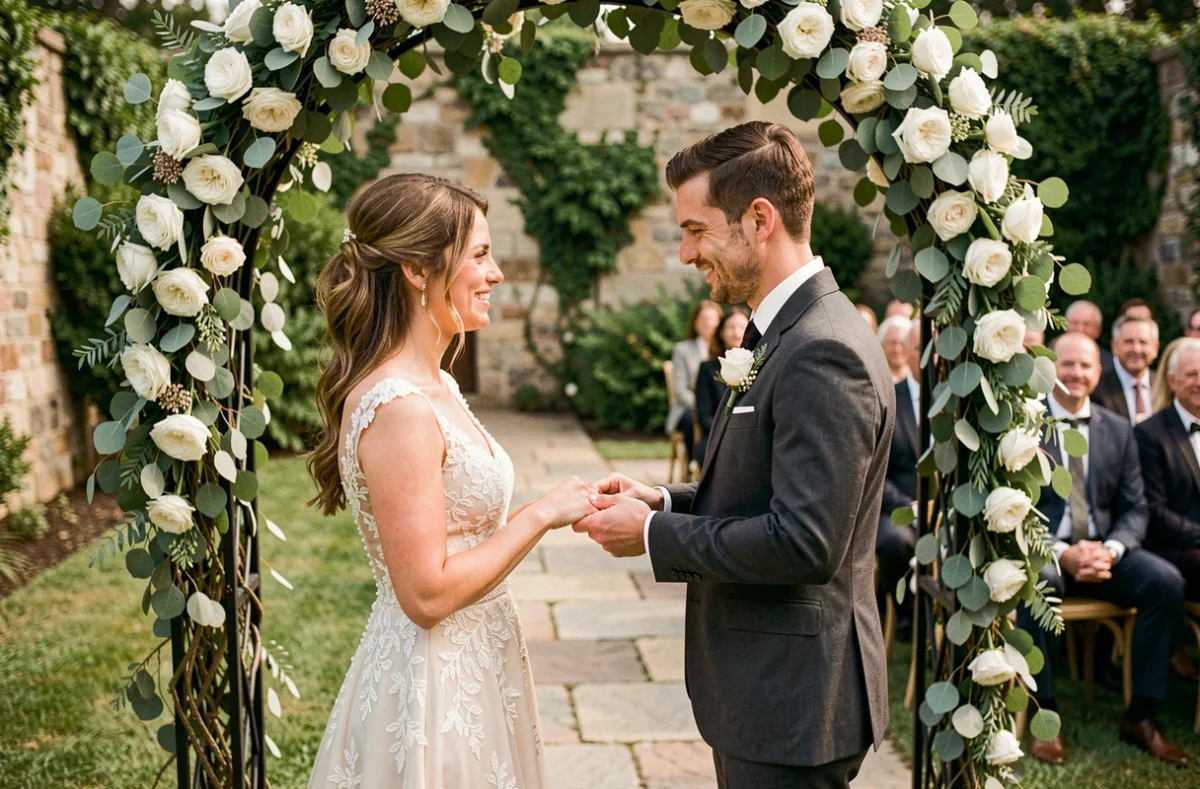
In France, most weddings take place between June and September. This seasonal pattern shapes the entire planning process: venue availability, vendor prices and guest attendance. However, industry professionals report a notable increase in requests for autumn weddings, with bookings rising outside the peak season.
Planning a wedding means coordinating dozens of decisions, and most guides offer the same linear timeline. The problem is that this timeline often overlooks the practical constraints that determine whether the day will actually go smoothly.
Plan a wedding around your guests’ constraints, not an ideal timeline
Most couples start by choosing a date, a venue and a theme. They consult their guests later—sometimes too late. Reversing this approach can make a real difference to the quality of the event.
Starting with your guests’ actual constraints means first checking the off-season availability of your closest friends and family. A date in October or April may work for more families than a Saturday in July, when half your guest list is on vacation. TF1 reports that some venues are seeing increased business in autumn, showing that wedding dates are becoming more spread out across the year.
Transport is another issue worth addressing early. A beautiful reception venue that can only be reached by car, with no train station or shuttle service, rules out some guests. Couples who factor this in from the start can reduce last-minute cancellations and logistical frustrations.
- Physical accessibility of the venue: stairs, dirt paths, wheelchair access—check before booking, not afterward
- Dietary requirements: allergies, vegetarian or religious diets—share these with the caterer when choosing the menu, not the day before
- Nearby accommodation: if the venue is remote, offering practical options (holiday cottages, blocks of reserved guesthouse rooms) saves guests from having to sort this out on their own
This approach doesn’t make planning more complicated. It makes it more reliable. When guests feel welcome and considered, it creates an atmosphere that decoration alone cannot.
Couples looking to structure their preparations around these factors will find useful resources on the Mariage et Vous website, which outlines the different stages using this kind of framework.

Wedding budget: what the season and format really change
Setting an overall budget is universal advice. Less commonly discussed is how your choice of season and format shifts your spending across different categories.
TF1’s report says that some venues charge less during the off-season. Vendors also report potential savings outside the traditional wedding months. These differences depend on the venue, date and services selected, so comparing complete quotes is still the only reliable way to assess costs.
A weekday wedding, for example, often costs less than a Saturday wedding. The trade-off is that fewer working guests may be able to attend. This kind of decision highlights a real compromise: cutting costs may sometimes mean giving up the presence of some loved ones.
Where there’s room to negotiate
The reception venue and catering are usually the two biggest expenses. For catering, the format (buffet, seated meal or cocktail reception) can significantly affect the bill. A cocktail reception featuring local, seasonal ingredients may offer better value than a traditional five-course seated meal.
Price differences for photography, music and decoration often reflect genuine differences in the services provided. Comparing three itemized quotes and checking what’s included (hours, retouching, equipment) helps avoid unpleasant surprises.
Wedding vendors: check specific commitments, not labels
Choosing vendors is often presented as a matter of taste or recommendations. It’s also a matter of verification.
Without a unified certification system in the wedding industry, couples need to verify the specific commitments each vendor makes. A caterer who calls themselves “eco-friendly” without specifying where their ingredients come from or how they manage waste isn’t providing useful information.
What the contract should specify
A reliable vendor contract should include at least the following:
- A breakdown of the services included and any possible extras (overtime, travel, additional equipment)
- Cancellation terms and associated fees, with clear tiers based on how much notice is given
- Delivery or setup deadlines, and who is responsible in the event of a delay
- Proof of professional liability insurance
Always request a written contract, even for an independent DJ or florist. It protects both parties. Wedding-related disputes often arise from services that were not clearly defined verbally.

Wedding planning timeline: the deadlines that really matter
Booking the reception venue is the first major decision. The most popular venues are booked one to one and a half years in advance, which shapes the rest of the timeline. Until the venue is confirmed, other bookings remain on hold.
Administrative procedures (filing your marriage application at the town hall and publishing the banns) are subject to mandatory legal deadlines. Town halls generally require the application to be submitted several weeks before the civil ceremony. For a religious wedding, the lead time may be longer, depending on the place of worship.
The final six months before the ceremony
This is when the finer details come together: fittings, finalizing the menu with the caterer, sending invitations and confirming the day’s schedule with each vendor. A shared planning timeline (an online spreadsheet accessible to both partners) helps prevent missed tasks and duplication.
The month before the wedding is for confirming guest numbers with the caterer, finalizing the seating plan and preparing a summary document for the day-of coordinator, whether a professional or a willing friend or family member. A coordinator with a detailed hourly schedule can handle unexpected issues without the couple having to step in.
Planning a wedding means making practical decisions in an order that accounts for real deadlines, real costs and the people who will actually be there. Linear guides help you remember everything. What makes the difference is adapting each step to the specific constraints of your situation, rather than following a standard template.