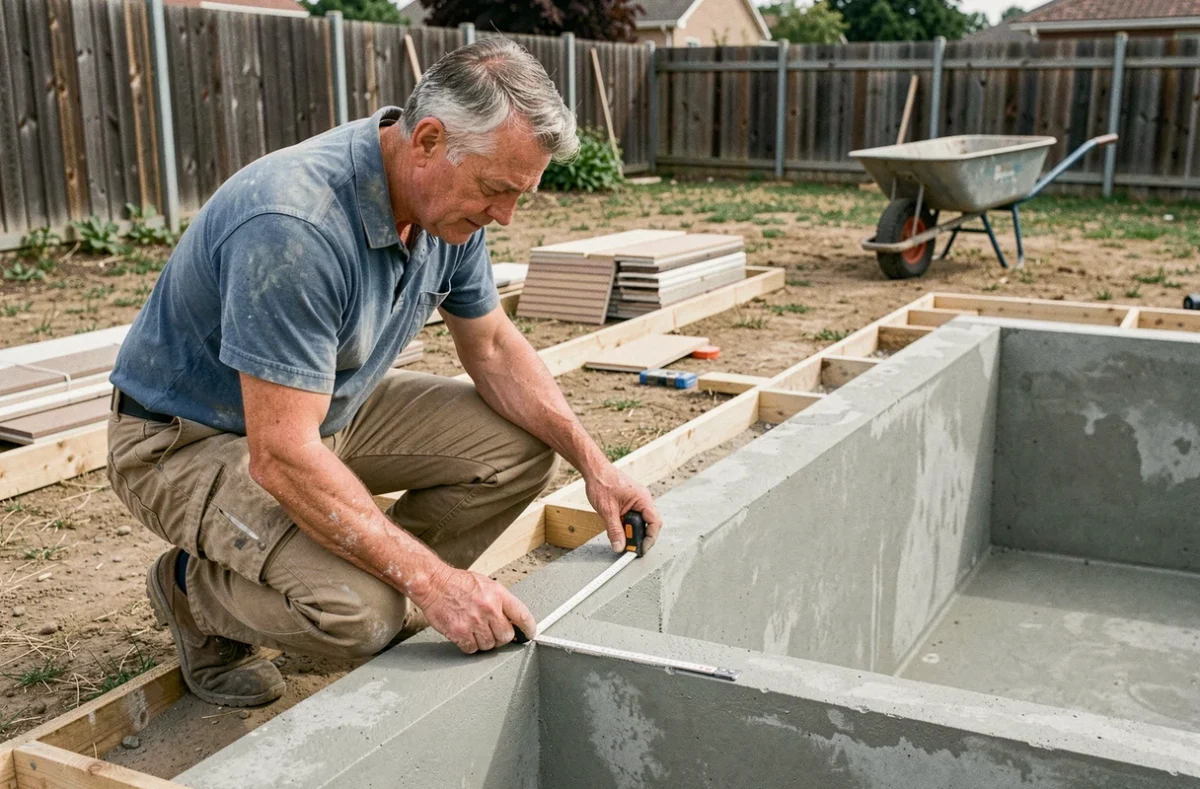
The sizing of the hydraulic network determines the entire operation of a garden pool, well before the choice of the lining or the shape of the basin. Installing the correct pipe sizes, calibrating the pump flow rate, and anticipating local regulatory constraints avoids costly adjustments after construction.
Hydraulic Sizing and Filtration of a Garden Pool
An undersized hydraulic circuit degrades water quality, increases electricity consumption, and reduces the lifespan of the pump. The flow rate of the filtration system must allow for the entire volume of the basin to be circulated within four to five hours at most during the swimming season.
The diameter of the pipes (return, suction, bottom drains) is chosen based on this target flow rate and the length of the circuit. The farther the technical room is from the basin, the greater the pressure loss, which requires either larger pipe sizes or a more powerful pump.
The sand filter remains the standard in residential settings, but the recycled glass filter offers superior filtration fineness (by a few microns) and clogs more slowly. The choice of filtering media directly affects the frequency of backwashing and thus the water consumption of the pool.
We observe that many projects neglect the calculation of the total pressure loss of the circuit. Adding up the straight lengths, bends, valves, and elevation differences between the basin and the technical room allows for the selection of an appropriately sized pump rather than an oversized one. A variable-speed pump adjusts its speed according to actual needs and significantly reduces the electricity bill compared to a single-speed model.
To delve deeper into the technical specifics of different types of pools and compare filtration solutions, the Refair website on pools details configurations suitable for each project.
Regulations and Water Restrictions Before Pool Construction
Regulations are not limited to building permits or prior work declarations. Prefectural drought orders may prohibit the filling or leveling of a private basin, including for an already constructed pool.
Restrictions vary according to geographical area and the current alert level. Before any filling, checking the current orders in one’s municipality is a precaution often overlooked in construction guides. A project completed in June may remain empty all summer if the department goes into heightened alert.
Prior Declaration or Building Permit
The surface area threshold that triggers a building permit rather than a simple prior declaration depends on the size of the basin and the possible presence of a shelter. The local urban planning plan (PLU) of the municipality may impose setbacks from property lines, maximum heights for shelters, or specific materials for coping stones.
Consulting the town hall’s urban planning department before finalizing the layout avoids a file rejection or a compliance issue after construction.
Water Conservation and Routine Pool Maintenance
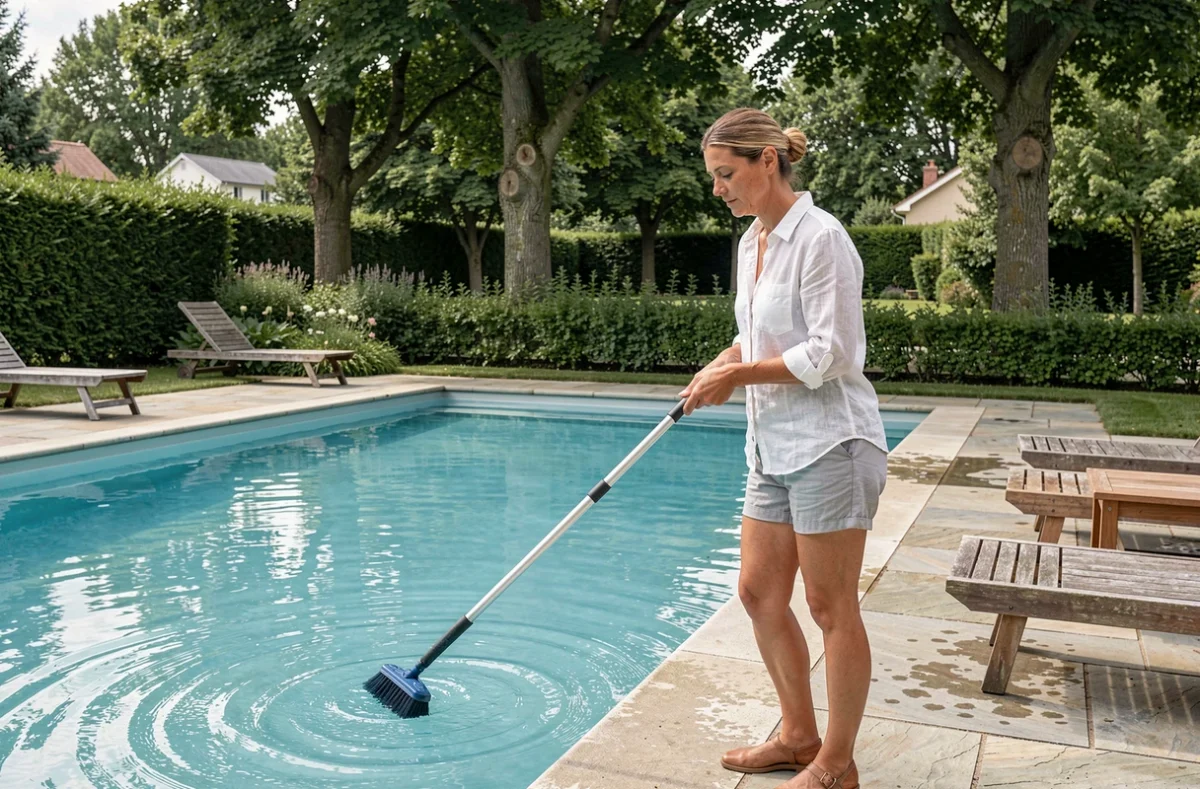
The question of a pool’s water consumption does not arise solely at the initial filling. Evaporation, filter backwashing, splashes, and potential leaks are the main sources of loss during operation.
Covering the pool reduces evaporation by 50 to 95% according to figures reported by the Federation of Pool Professionals. The cover (bubble cover, roller shutter, rigid cover) also acts as thermal insulation and limits nighttime cooling, which reduces the need for heating.
- Install a dedicated water meter near the equipment to measure actual consumption and quickly detect a leak in the hydraulic circuit.
- Do not completely drain the pool every year: a partial water renewal is sufficient in most cases.
- Schedule filter backwashing based on the differential pressure displayed on the manometer, not according to a fixed calendar.
The industry also recommends monitoring water consumption to detect a leak before it damages the structure or surrounding land. A dedicated meter makes this detection immediate.
Choosing the Type of In-Ground Pool: Shell, Concrete, or Kit
The polyester shell pool is installed in a few days on a bed of compacted gravel. Its quick implementation is a real advantage, but the available shapes are limited to the manufacturer’s molds. Customizing dimensions or depth remains constrained.
Concrete (shotcrete or poured into block forms) offers total freedom of shape and depth. The concrete basin is the only fully customizable type, including for composite bottoms (beach entry, diving pit). In return, the construction lasts several weeks and the overall cost is significantly higher.
The kit (steel, aluminum, or polypropylene panels) represents a compromise between the two. Self-construction is possible for an experienced DIYer, but the excavation and hydraulic connection remain critical steps where a leveling or compaction error compromises the durability of the structure.
Interior Lining and Waterproofing
The liner remains the most common lining due to its cost-effectiveness. Its lifespan depends on the chemical balance of the water and UV exposure. A liner that is too stressed by an unstable pH discolors and weakens more quickly.
Reinforced PVC offers better mechanical resistance than traditional liners and can be custom-welded directly in the basin. Coating or tiling, reserved for concrete pools, increases the budget but simplifies localized repairs.
Pool Robot and Treatment Products: What Changes Maintenance
The electric pool robot autonomously cleans the bottom, walls, and waterline. The main selection criterion is the robot’s own filtration capacity (basket or cartridge size) and its cleaning cycle suited to the surface area of the basin.
For water treatment, chlorine remains the reference for residential disinfection. Salt electrolysis produces chlorine in situ from salt dissolved in water, eliminating the handling of chemicals and stabilizing the disinfectant level. The initial cost of the electrolysis cell is offset over a few seasons by reducing the purchase of treatment products.
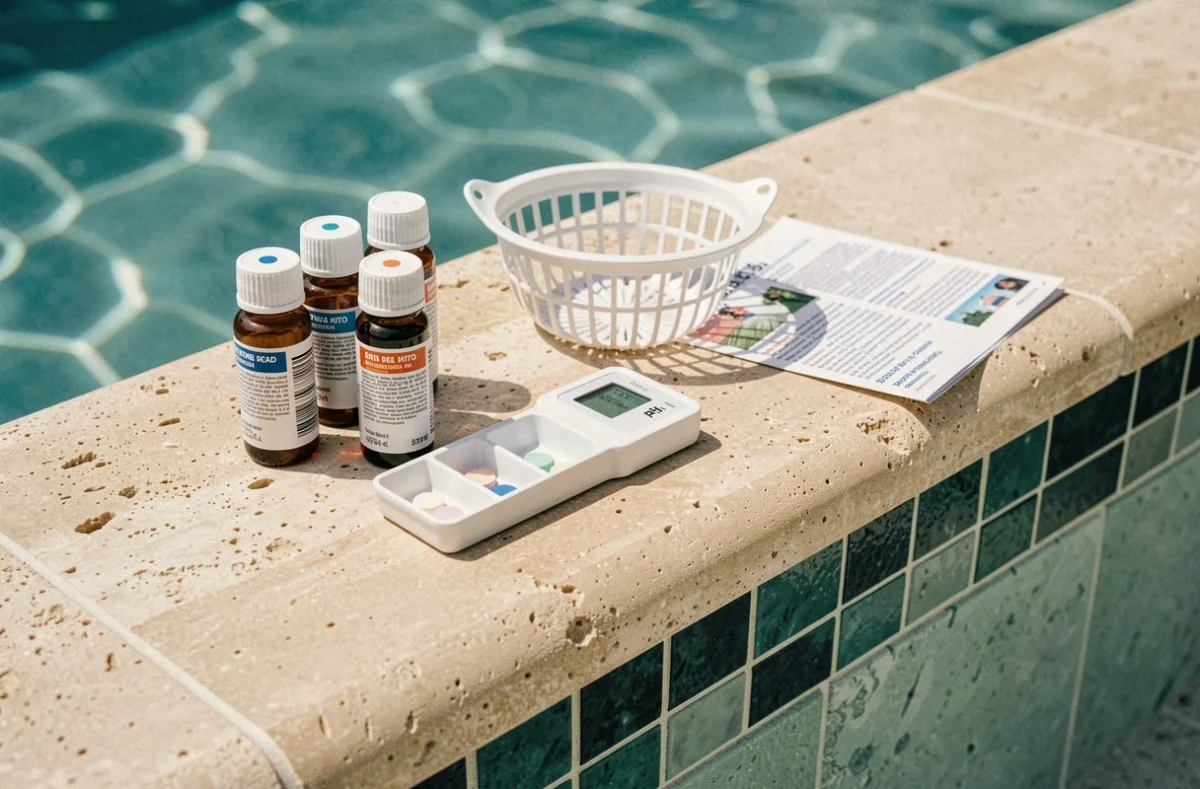
- Measure pH and disinfectant levels at least twice a week during the season, once a week off-season.
- Clean the skimmer basket and pump pre-filter weekly to maintain filtration flow.
- Check the condition of the electrolysis cell seal and descale the plates according to the manufacturer’s instructions.
Regular pool maintenance is not limited to adding products. A good balance between filtration, covering, and chemical treatment limits corrective interventions and extends the lifespan of each piece of equipment.