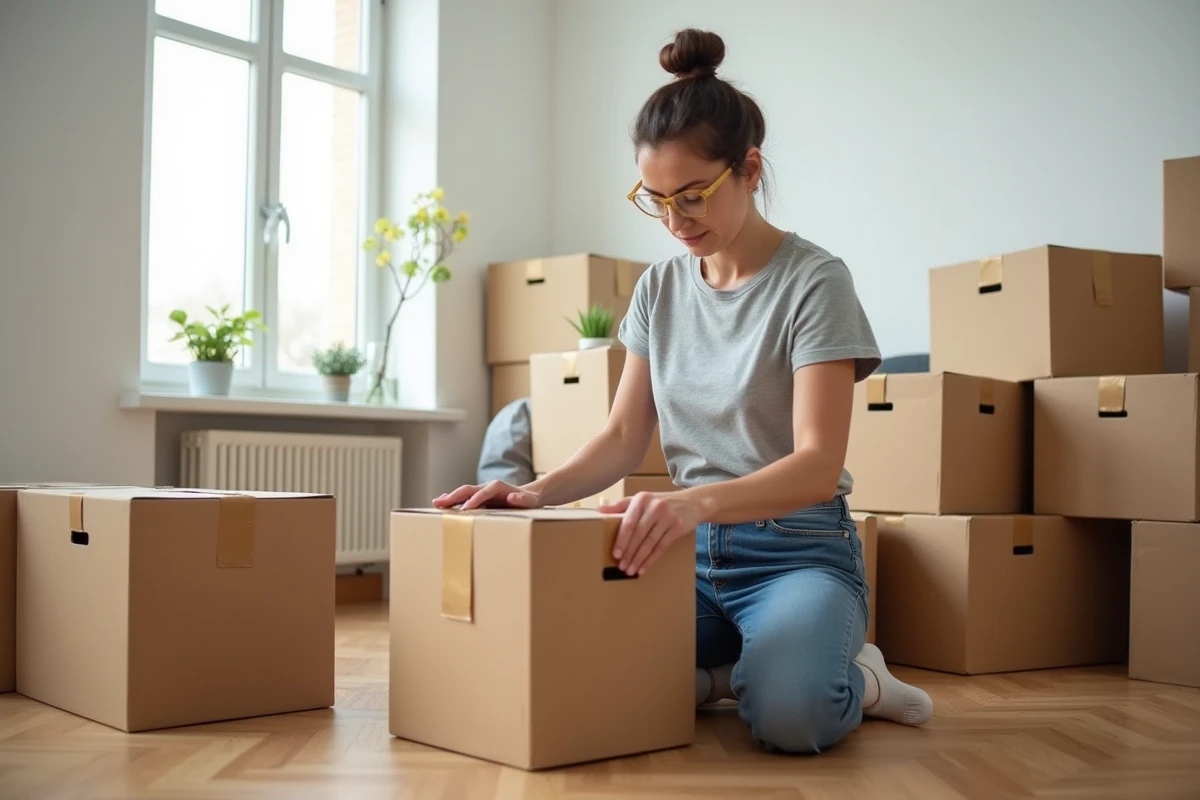
The Gifi moving boxes raise a technical question that most buying guides avoid: their behavior in reuse. A single-wall box sold at a discount store does not have the same lifespan as a professional double-wall box, and this difference becomes apparent from the second usage cycle. Understanding the product’s limits before checking out helps avoid unpleasant surprises on the big day.
Strength of Gifi boxes in real conditions: what the grammage doesn’t tell you
The premium Gifi boxes have a volume of 72 liters and a decent stacking capacity, stable up to five levels according to field feedback. This performance quickly deteriorates in humid conditions.
Testimonials published on the UFC-Que Choisir forum report visible deformations after 48 hours of exposure to humidity, especially during winter moves. The box absorbs ambient water by capillarity at the edges and folds, areas where the structural glue gives way first.
We recommend storing loaded boxes in a dry, ventilated space, never in direct contact with a garage or basement floor. A stretch film around the base (on the first ten centimeters) protects the critical area without resorting to single-use plastic bags, which are now banned for moving since the transposition in France of the European directive on plastic packaging, effective by decree n°2025-1123.
For those considering buying Gifi moving boxes in bulk, this humidity constraint should guide the timing: moving during the dry season significantly reduces the risk of breakage.
Gifi boxes versus recycled alternatives: stacking versus longevity
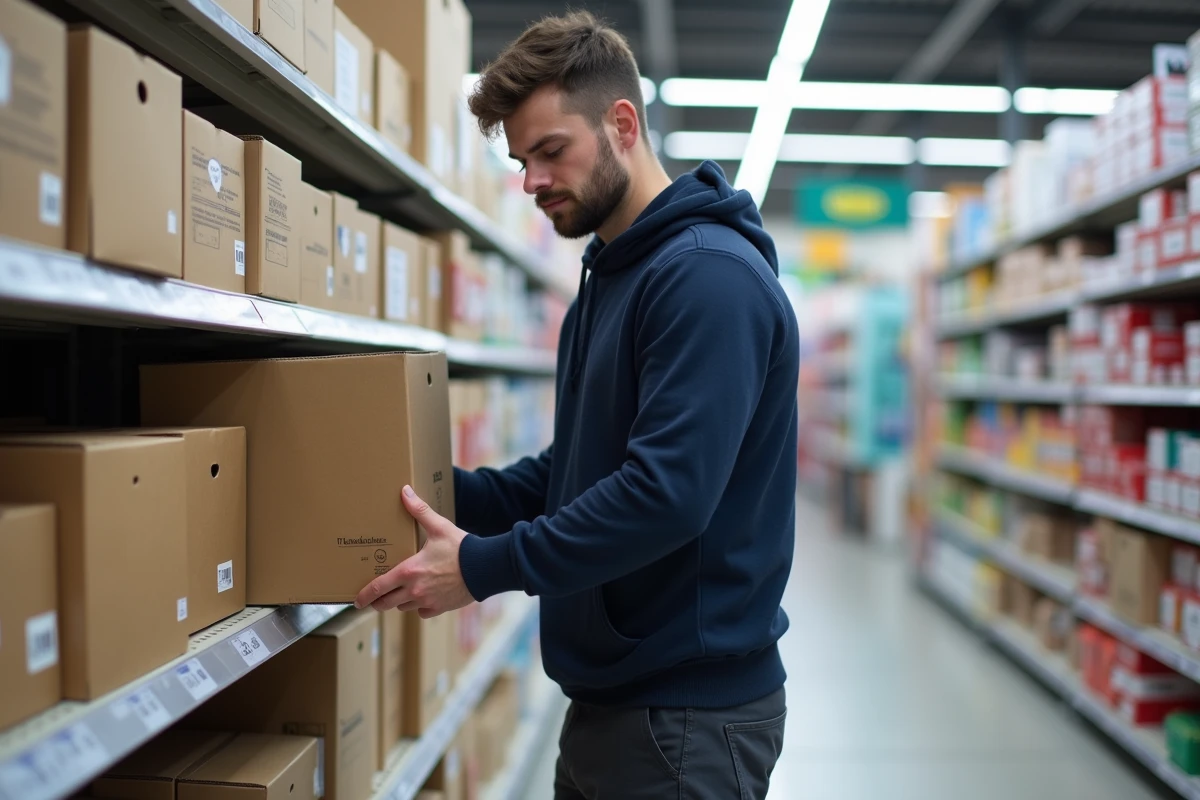
The comparison with boxes from brands like Ikea (recycled Kallax range) reveals a clear trade-off. Gifi boxes offer better stacking stability, making them more suitable for dense loads (books, packed dishes). However, their lifespan in intensive reuse remains lower.
A recycled Ikea box, designed for long-term storage, maintains its rigidity over more cycles. The Gifi box, optimized for one-time use at a low price, begins to bend at the corners after the second full load if no precautions are taken.
The choice depends on the project. For a one-time move with no intention of keeping the boxes, Gifi fulfills the contract. For a reuse logic over multiple moves or prolonged storage, the extra cost of a thicker box pays off after the third cycle.
DIY reinforcement to reuse a Gifi box for three cycles
Extending the life of a Gifi box beyond a single use requires three targeted interventions, achievable with common materials.
- Reinforce the vertical edges with heavy-duty tape (like gaffer) along the entire height. The edges are the first point of structural failure during stacking.
- Double the bottom with a flat cardboard piece, secured with gummed kraft tape. The original bottom, subjected to weight, deforms like a hammock after the second cycle without this reinforcement.
- Apply a layer of diluted vinyl glue to the outer faces and let it dry flat for twelve hours. This technique partially waterproofs the surface and stiffens the fiber.
- Store empty boxes flat between uses, never assembled. A box left assembled for several weeks undergoes creep that weakens the folds.
A reinforced Gifi box can support three complete moving cycles before losing its load-bearing capacity. Beyond that, recycling remains the only responsible option, as the box is 100% recyclable according to current regulatory requirements.

Availability in Gifi stores and seasonal stock management
Gifi distributes its moving boxes in physical stores and online. Availability fluctuates significantly by season. Stock shortages peak between May and July, a period when demand explodes with lease endings and job relocations.
We observe that stores located in university areas or on the outskirts of major cities experience shortages earlier, sometimes as early as mid-May. Reserving online with in-store pickup allows securing a batch, provided you do so at least two weeks before the planned date.
Combining Gifi boxes and recovered boxes
Mixing new Gifi boxes for fragile items and recovered boxes (from supermarkets, textile stores) for linens and lightweight items reduces the budget without compromising protection. Supermarket boxes, often in banana or can sizes, offer sizes suitable for small items but cannot support stacking beyond two levels.
Categorizing contents by assigning a box size to each type of item also speeds up unpacking. The 72-liter Gifi boxes are suitable for duvets, pillows, and bulky clothing. For dishes and books, a smaller size limits the unit weight and protects the bottom of the box.
Zero waste moving: the Gifi box in a circular logic
The gradual ban on single-use plastic packaging pushes towards an approach where each box is used multiple times before being recycled. Reusing a box three times divides its material footprint by three, an argument that goes beyond simple economic calculation.
After the last cycle, dropping off at a cardboard collection point (recycling center, yellow bin depending on municipalities) ensures a return to the supply chain. Organizations like Emmaüs also accept boxes in good condition for their own logistical needs, further extending the usage loop before final recycling.
The Gifi box, despite its limits in raw durability, fits into this circular scheme provided the reinforcements described above are applied. The cost of a roll of heavy-duty tape and a bottle of vinyl glue remains marginal compared to the price of a new batch of boxes.