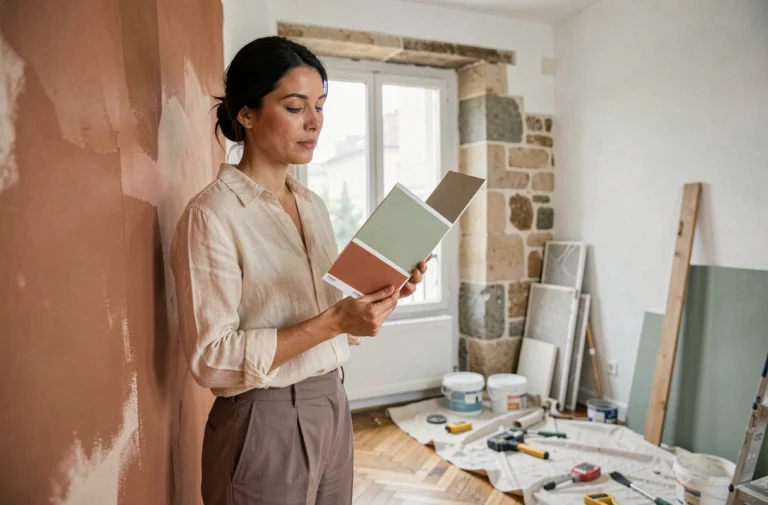
A living room wall that seems dull despite a recent coat of paint, a sofa that never finds its place, decorative objects piled up without coherence: we all know that moment when interior decoration seems to resist our efforts. The problem rarely lies with the budget. It is more about some structural choices that we overlook in favor of details.
Raw materials and earthy colors: the foundation of a coherent interior decor
When redecorating a room, the temptation is to start with furniture or accessories. However, you save time by first establishing a color palette and a family of materials. Two or three shades are enough to anchor the atmosphere of an entire space.
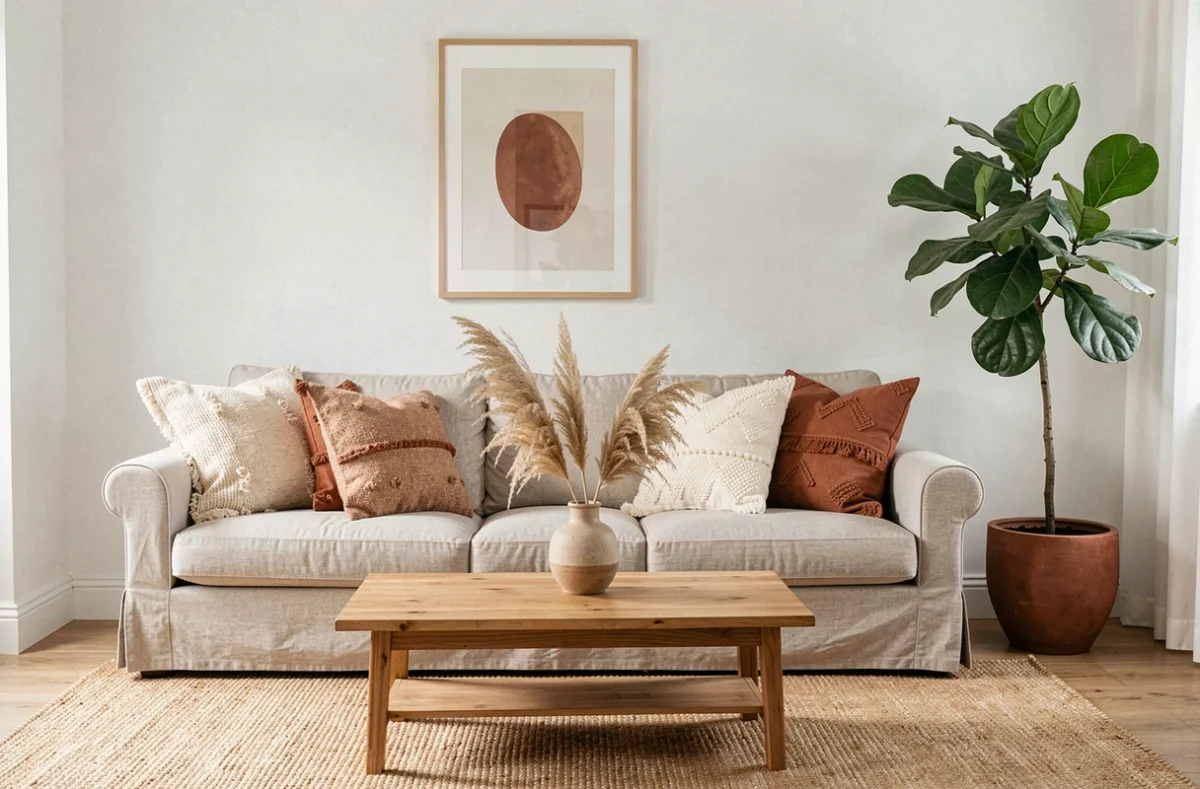
Earthy tones (terracotta, ochre, sandy beige) remain a reliable choice because they pair well with both light wood and black metal. A neutral base on the walls frees up furniture choices: you can change the style of the sofa or table without having to redo everything.
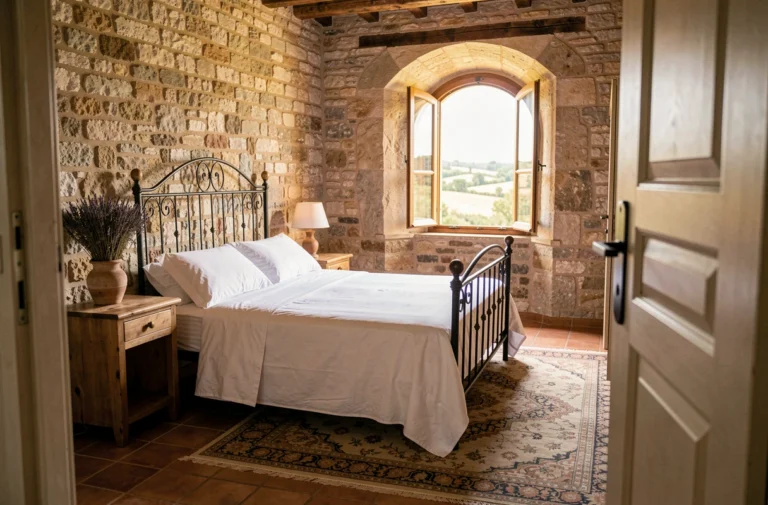
In terms of materials, solid wood, linen, and natural stone add texture without visually overwhelming the space. You can easily find them by browsing the decor on the Monsieur Bricoleur website, where wood-textile combinations are detailed by room type.
A common pitfall is to multiply finishes: a stone veneer wall, a cement tile floor, a paneled ceiling. Three different materials per room is a comfortable maximum. Beyond that, the eye doesn’t know where to settle.
Wall decoration and objects: composing a wall without saturating it
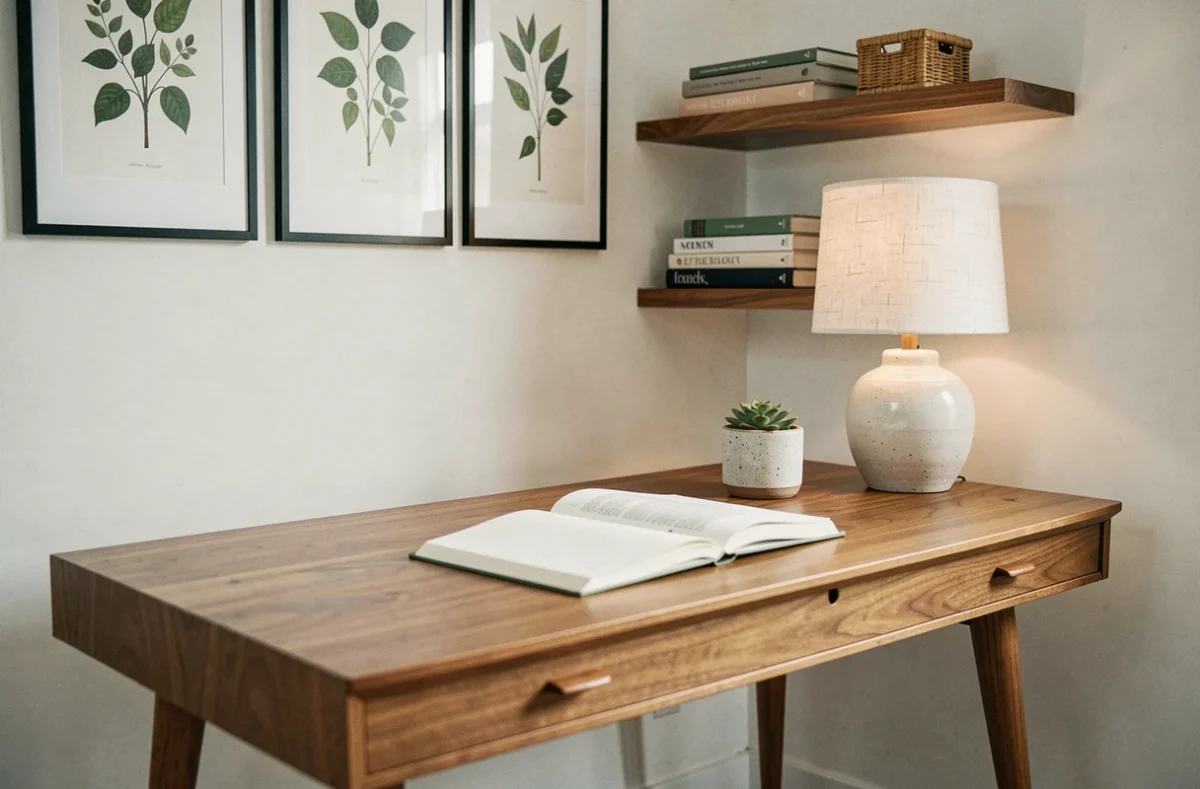
An accent wall (frames, mirrors, shelves) gives character to a living room or bedroom. The challenge is the dosage. We’ve all seen those overly dense wall compositions that turn a living room into a flea market.
The free third rule on a decorative wall
To maintain visual breathing space, you can apply a simple principle: one third of the wall remains empty. Specifically, if you are working on a three-meter wide section, the composition (frames, mirror, sconce) occupies only about two meters. The rest is left bare.
This emptiness is not waste; it highlights the objects you’ve chosen. A large round mirror placed alone on a light wall will have more impact than a gallery of ten small tightly grouped frames.
Mixing formats without losing the thread
You can pair a large format (poster, mirror) with two or three smaller pieces, as long as you maintain a common element. This link can be the color of the frames, the material (all wood, all brass), or the theme of the visuals.
- A main wide frame placed at eye level, which sets the tone for the composition
- Two to four secondary elements (photos, illustrations, small mirror) grouped on one side
- A volumetric object (wall sconce, small shelf) that breaks the flatness of the whole
Aligning the center of the composition at about 150 cm from the floor works in most spaces, whether standing in a hallway or sitting in a living room.
Reused furniture and handmade pieces: a decor trend structured by regulations
Finding an antique piece of furniture or rescuing a dresser from a second-hand site is no longer just an aesthetic choice. The reused furniture sector is now regulated by approved eco-organisms: Ecomaison, Valdelia, and Valobat. The specifications for 2024-2029 set goals for repair and reuse. Ecomaison aims to handle 120,000 tons of furniture items intended for reuse by 2030.
In practice, this means that the supply of refurbished furniture will expand in the coming years, with clearer circuits for consumers. Quality pieces in walnut, oak, or rattan can already be found in recycling centers and on specialized platforms.
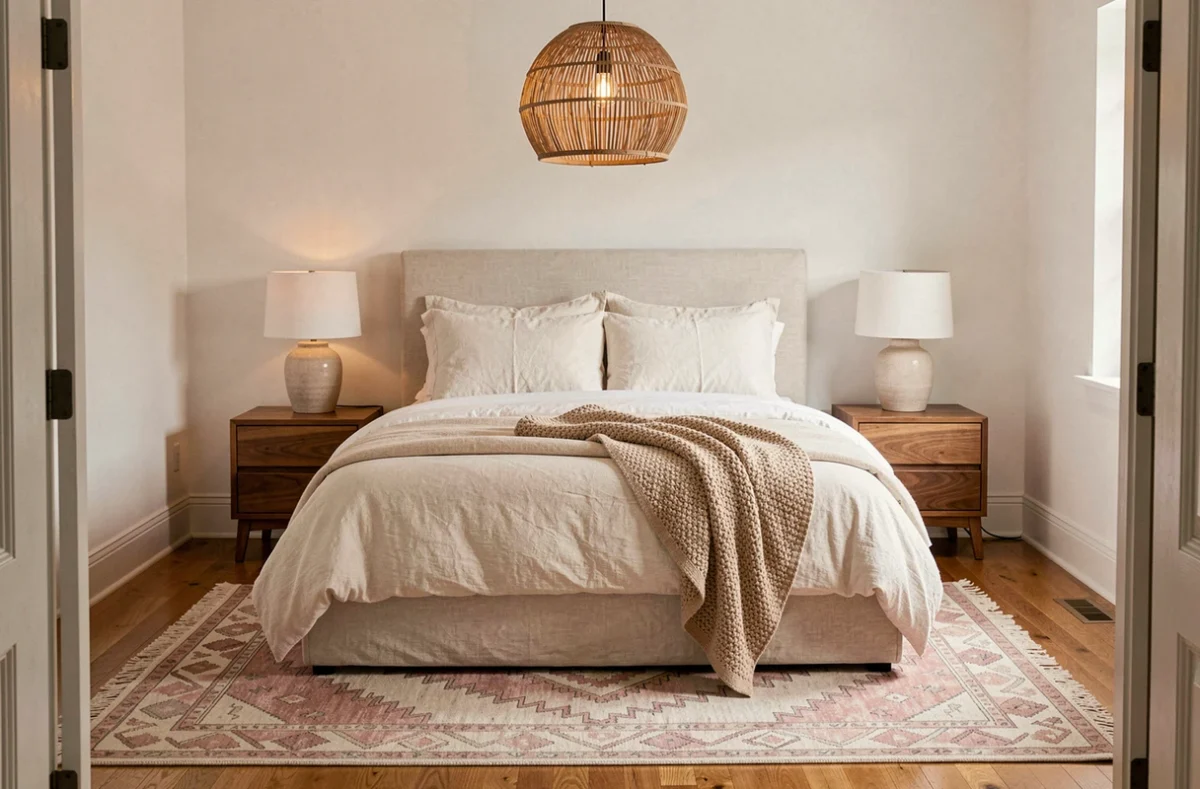
Integrating a found piece without breaking coherence
The risk of reused furniture is the “disparate accumulation” effect. To avoid this, limit strong pieces to one or two per space. A 1960s teak sideboard works very well in a contemporary living room, provided the rest of the furniture remains understated.
Opinions vary on this point, but a reliable tip is to repaint or refinish the found piece in a tone already present in the room. A small accent table repainted in the same shade as the baseboards or shelves will integrate naturally.
Textiles and lighting: two underestimated levers to transform an interior
The effect of changing curtains or repositioning a lamp is often underestimated. Yet these are the quickest and least expensive modifications to refresh interior decoration.
Regarding textiles, law no. 2025-188 of February 27, 2025, begins to regulate the composition of upholstery textiles (curtains, sofa coverings, cushions). Checking labels before purchasing becomes a useful reflex, especially for households attentive to indoor air quality.
- Linen or thick cotton curtains for living spaces, filtering light without darkening
- A limited number of cushions (three to five on a standard sofa) with varied textures: corduroy, washed linen, boucle wool
- A throw in a contrasting tone to break the monotony of a neutral sofa
For lighting, multiplying low light sources transforms the atmosphere of a living room in minutes. A table lamp near the sofa, a discreet string of lights on a shelf, and a corner floor lamp effectively replace a single ceiling light that flattens the volumes.
Interior decoration does not require a substantial budget or an architect to work. A few well-chosen materials, a composed wall with restraint, a found piece that tells a story, and coherent textiles are enough to make a space pleasant. The hardest part remains resisting the urge to add more.