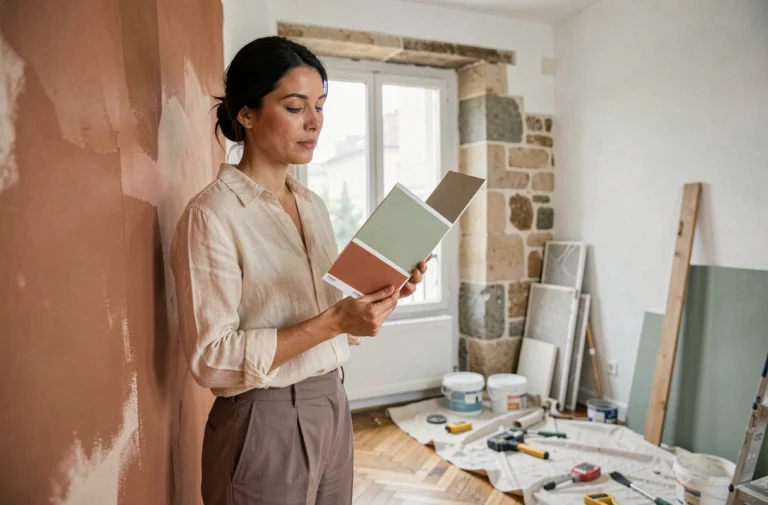
Wood glue does not always ensure greater strength than traditional nailing, especially on certain composite materials. Basic tools are often sufficient for original creations, where the use of sophisticated equipment seems essential at first glance.
A simple screwed assembly can compete with more complex techniques, provided you follow a few tips. Even recycled materials, usually overlooked, can yield surprising results when used well.
Why DIY at home is increasingly appealing to beginners
Once considered a domain reserved for a few insiders, DIY now attracts an astonishingly large audience eager for DIY projects for the home. The arrival of accessible materials, the abundance of ideas, and the explosion of platforms like https://www.quartierbricole.be/ have democratized the practice. Now, all it takes is a hint of desire to start with confidence. The reasons for this enthusiasm are numerous: the desire to personalize decor, the need for autonomy, or simply the pleasure of creating with one’s hands.
The economic appeal and environmental impact weigh heavily in the balance. Making things oneself, repurposing objects, prioritizing repair over purchase: this mindset emphasizes simplicity and inventiveness. DIY moments also become shared times: families and friends come together, children and adults unite their efforts around DIY projects for the home. One learns the skill, experiments, improvises, all without pressure, just for the desire to complete a collective project.
No need for a big budget or advanced skills to get started. A few tools, a project that suits you, and a bit of curiosity are enough. Ideas for successful DIY projects abound: giving new life to a piece of furniture, building a shelf, inventing wall decor with reclaimed materials… With each creation, you progress, see your space transform, and develop useful skills like planning, patience, or problem-solving. Every success, even modest, encourages you to try again, alone or with others.
What creative ideas can you easily test with minimal materials?
Upcycling opens up possibilities: a cardboard box turns into a storage container, a glass jar becomes a light fixture or a spice pot. Accessible DIY projects draw from everyday objects without requiring expenses. A toilet paper roll transforms, in a child’s room, into animals to assemble. Cutting or folding paper is enough to create garlands or aerial mobiles.
Here are some concrete ideas to bring your concepts to life, even with minimal equipment:
- Wall decoration: create an entire gallery of custom photo frames from cardboard or reclaimed wood, painted or dressed in fabric scraps.
- Clever storage: assemble wooden crates to create a modular shelf, or repurpose a pallet into a unique coffee table.
- Garden objects: design a plant marker from wood, transform an old crate into a planter, or make a simple birdhouse with various scraps.
Renovated furniture gives a second life to your interior: a coat of paint, new handles, or wallpaper can change everything. You can also structure a room by fixing a wooden strip or revisiting the organization of a space. These interventions go beyond decoration: they can touch on layout, lighting, and storage management. Let your experience guide you, adapt each project to your desires, and utilize every available material to shape objects that would not exist anywhere else.
Practical tips for successfully completing your first DIY projects without stress
To approach DIY without fear, it’s best to proceed methodically. It all starts with precise planning: detail the steps, list the materials, check the condition of your tools. A simple logbook helps anticipate forgetfulness, avoid unnecessary purchases, and keep control of your budget.
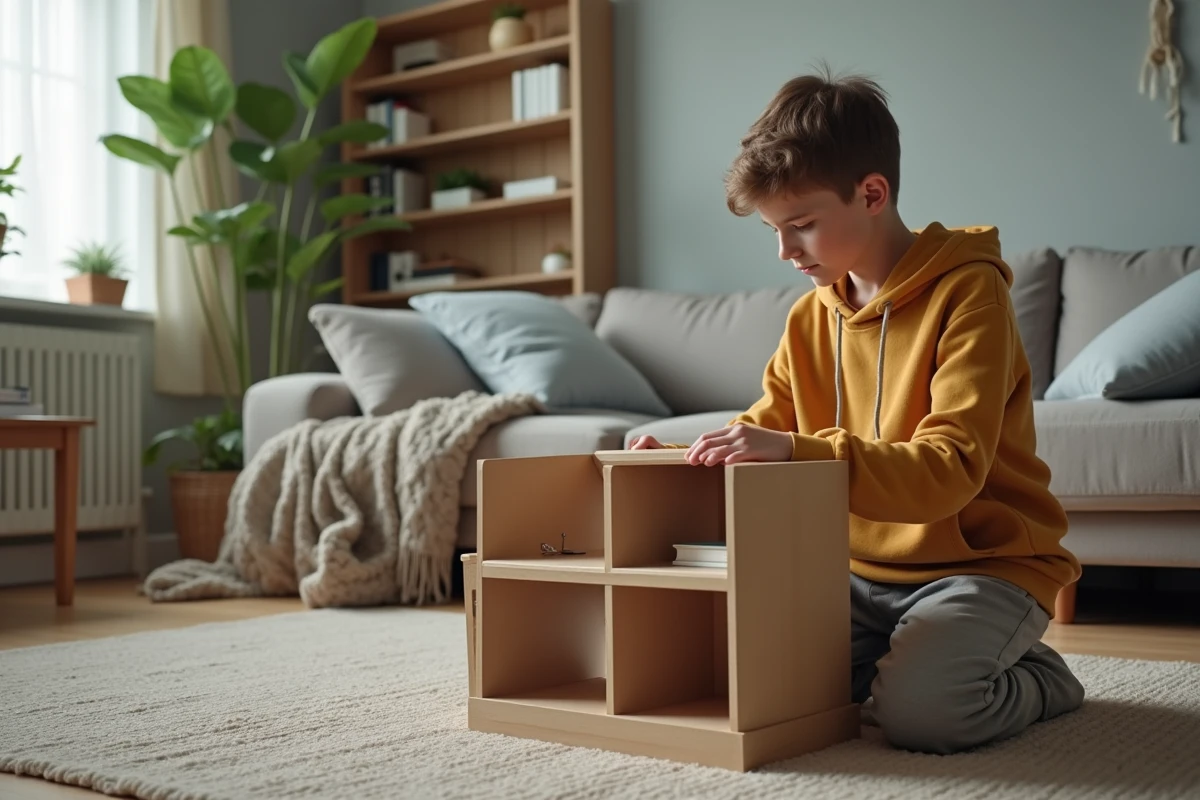
Choose DIY projects suitable for your level. Making a wooden pencil holder, a small shelf, or a decorative board allows you to get practical without getting discouraged. These early successes build confidence, stimulate patience, and inspire you to tackle more ambitious projects.
The organization of the workspace makes all the difference. A clear plan, organized tools, and good lighting facilitate concentration and limit mistakes. Also, think about your comfort: a stable stool, a flat surface, and a well-ventilated room if you are handling glue or paint.
Be forgiving of yourself. Mistakes are part of the learning process. Correcting, adjusting, starting over: each step refines your perspective and skills. DIY is not a race for perfection, but a way to experiment, solve unexpected issues, and gain autonomy. Project after project, patience sets in, technique sharpens, and the satisfaction of having created with your own hands becomes the common thread of the adventure.
A cluttered workbench, a piece of furniture saved from the dump, an idea taking shape under your fingers: DIY at home promises small concrete victories and a fresh perspective on your daily life.