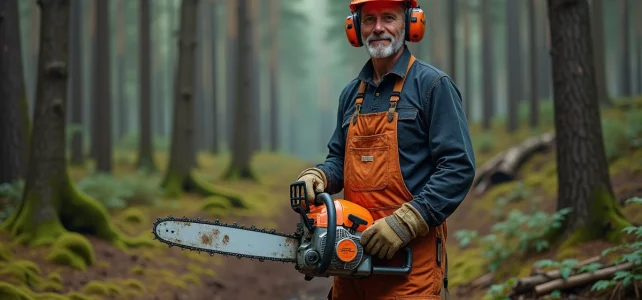
The chainsaw market is undergoing a transition. Battery models are gaining ground among homeowners, driven by noise restrictions in urban areas and local climate-air policies, while thermal engines remain the choice of forestry professionals. Choosing a chainsaw today means untangling technical criteria that have significantly evolved in recent years, particularly regarding safety and battery autonomy.
Guide Length and Cutting Diameter: The Technical Criterion Obscured by Product Sheets
Most buying guides classify chainsaws by type of engine. This makes sense, but it masks a more decisive parameter in daily use: the length of the guide bar and its relation to the actual diameter of the wood to be cut.
Read also : How to Successfully Complete the Process for Importing a Foreign Car in France
A simple rule applies: the guide must exceed the diameter of the trunk by at least a few centimeters to allow for a single-pass cut. Cutting in two passes with a guide that is too short multiplies the risks of kickback and prematurely fatigues the chain.
For pruning branches and light maintenance, a short guide is more than sufficient. However, for firewood or felling medium-sized trees, a significantly longer guide is necessary. Beyond that, we enter the realm of professional machines, which are rarely justified for a homeowner.
Further reading : The best online streaming platforms: alternatives and competitors
Before consulting a chainsaw comparison and reviews on tronconneuse.xyz, measure the diameters of the wood you cut most often: this data is more valuable than any marketing sheet.
Battery or Thermal Chainsaw: The Concrete Limits of Each Engine Type
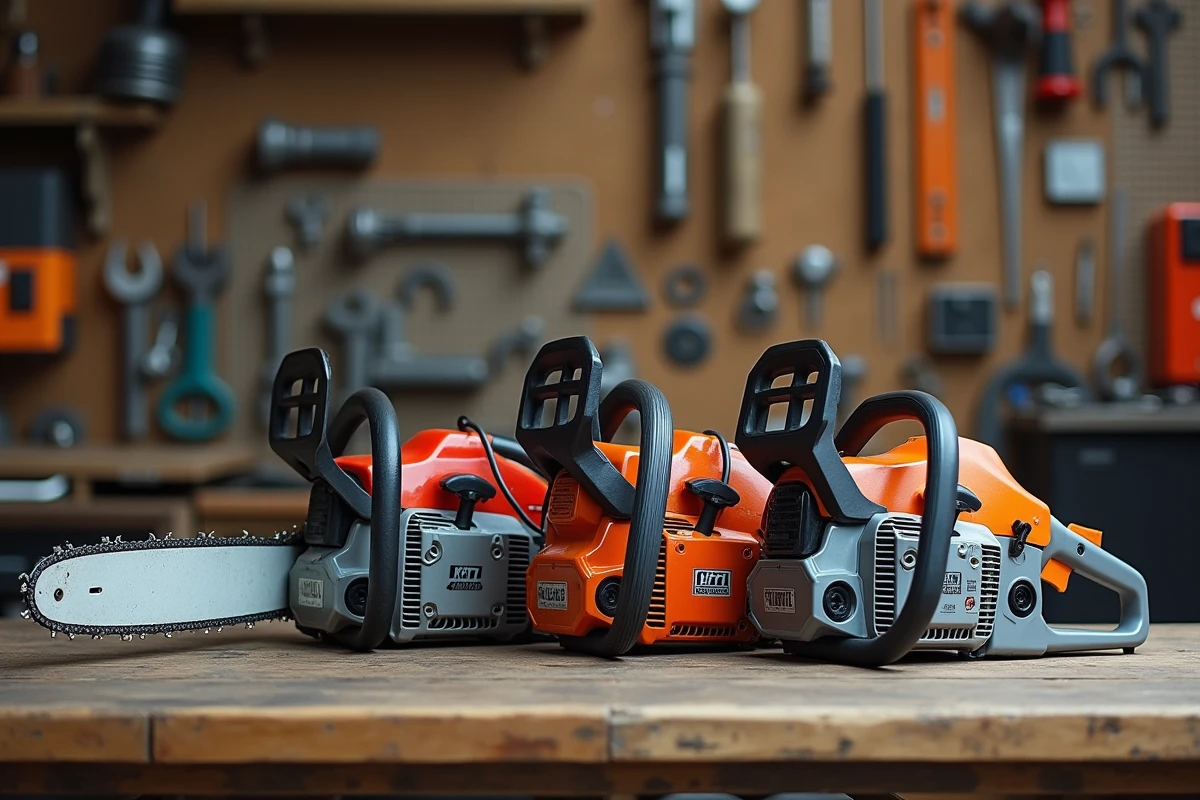
The battery/thermal opposition is often presented in a binary way. The reality is more nuanced, and feedback from the field varies on this point depending on usage intensity.
Battery Autonomy and Power
Battery chainsaws have gained power in recent years, to the point of covering the majority of a homeowner’s needs. High-voltage platforms offer performance close to entry-level thermals for cutting soft or medium-hard wood.
Their limit remains autonomy. A standard battery rarely covers more than one hour of continuous cutting, which is sufficient for regular maintenance but becomes limiting for a day of logging. The solution of an extra battery pack works, but increases the budget.
The Thermal for Endurance and Large Diameters
The displacement of the thermal engine directly determines the cutting capacity. For large quantities of hardwood or regular felling, the thermal remains the only truly reliable option for prolonged use. The trade-off: a higher weight, engine maintenance (spark plug, filter, carburetor), and a noise level that can be problematic in residential areas.
The available data does not allow for a universal threshold to determine the switch between battery and thermal. This threshold depends on the type of wood, frequency of use, and your neighborhood’s noise tolerance.
Safety Standards and PPE: What Has Changed Since 2023
The revision of the European standard EN ISO 11393 on protective clothing for chainsaw users has strengthened requirements, including for amateur use. The INRS and MSA have intensified their awareness campaigns since 2023-2024, and insurers are increasingly scrutinizing compliance with personal protective equipment in the event of an accident.
The minimum recommended PPE list for any chainsaw use:
- Certified cut-resistant trousers or gaiters that can stop the chain in case of contact with the leg
- Gloves compliant with standard EN 388, which protect against cuts and vibrations
- Forestry helmet with mesh visor and integrated hearing protection, even for short sessions
PPE is not an optional accessory but a condition for safe use, regardless of the chainsaw model chosen. The cost of a complete kit represents a fraction of the machine’s price, and some insurers are starting to condition the coverage of claims on the actual wearing of this equipment.
Chain, Tension, and Maintenance: Points to Check Before Purchase
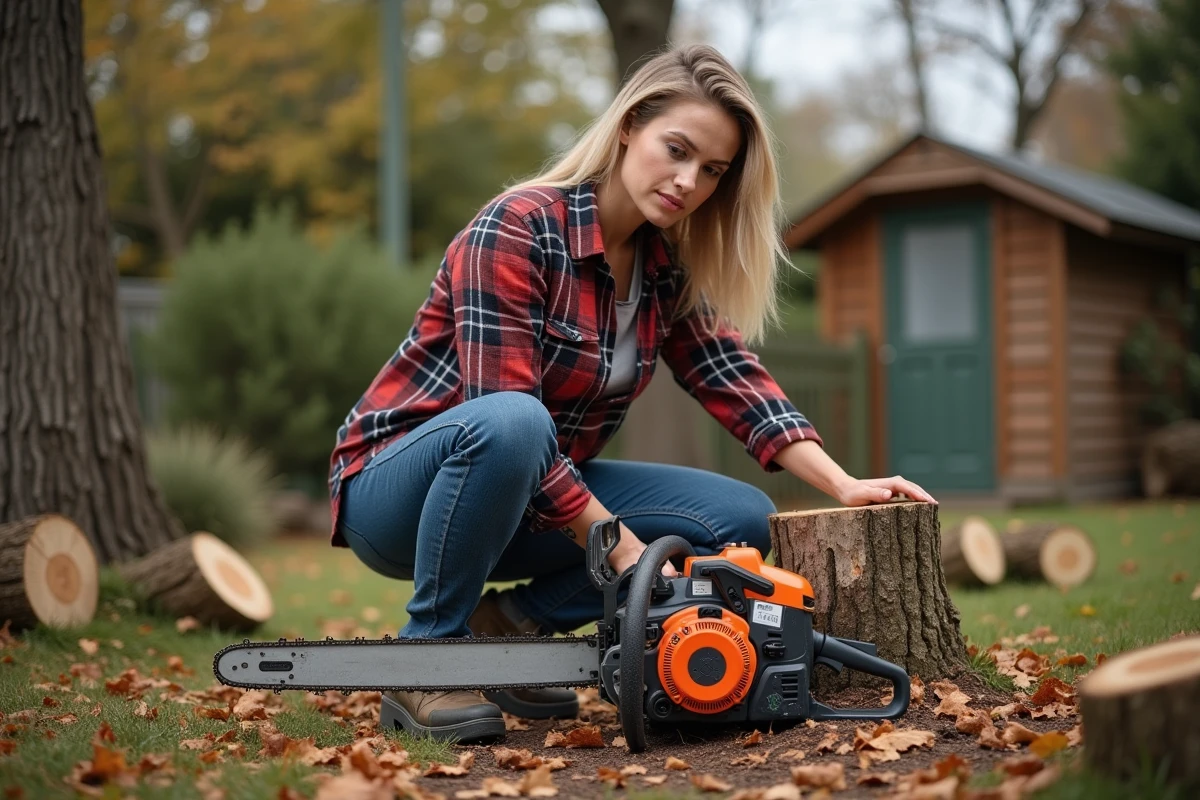
The type of chain directly influences cutting quality and safety. Two parameters deserve attention:
- The chain pitch: a smaller pitch is suitable for pruning and softwood, while a wider pitch attacks hardwood more effectively but requires more engine power
- The chain tensioning system: models with tool-free tensioning allow for quick adjustments in the field, preventing work with a loose chain (a frequent source of accidents)
- The automatic chain lubrication: check that the oil reservoir is accessible and that the flow is adjustable, especially if you alternate between dry and green wood
A poorly tensioned or poorly lubricated chain is the primary cause of premature wear of the guide and the chain itself. Also, budget for the cost of replacement chains and sharpening in your total budget.
Weight and Ergonomics in Real Situations
The weight stated on the technical sheet rarely corresponds to the weight in working order (with guide, chain, battery, or full tank). For high pruning, every gram counts. Test the weight in full configuration before buying, or if not possible, compare equipped weights rather than empty weights.
Brands like Husqvarna and Stihl offer tiered ranges that cover all uses, from compact pruners to forestry machines. The choice of the best chainsaw does not exist in absolute terms: it depends on the diameter of the wood, frequency of use, and overall budget including PPE and regular maintenance. A guide that is too long for your use will be just as unsuitable as a guide that is too short.