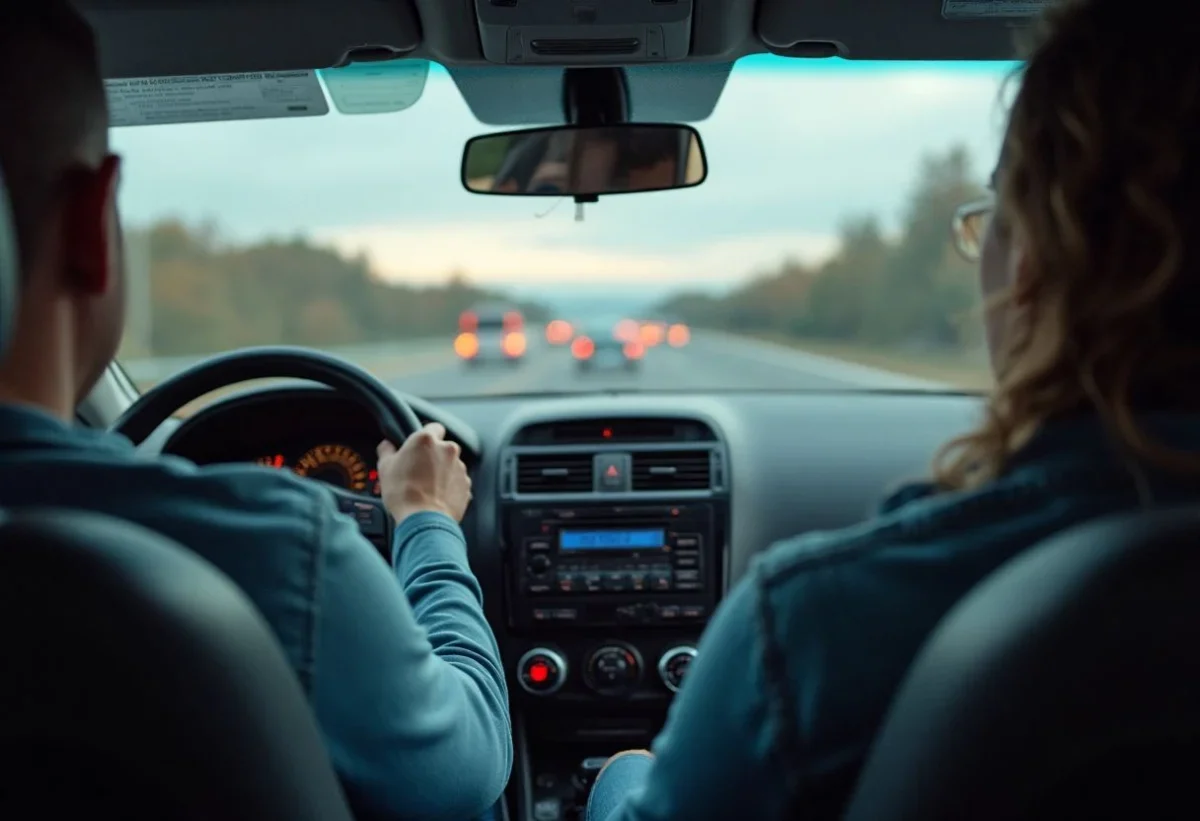
Visibility while driving is central to ensuring the safety of all road users. When getting behind the wheel, it is essential to be vigilant about the numerous factors that can alter our perception and, by extension, our reaction time. Whether driving on a road at night, in the rain, or in fog, each situation requires particular attention to minimize the risk of accidents.
Importance of visibility for driver safety
Statistics show that 90% of the information necessary for driving comes to us through sight. Poor visibility can therefore severely hinder our ability to react to danger. During the summer, for example, glare from the sun and the cleanliness of the windows significantly affect visibility. A dirty windshield can reduce visibility by 30%, highlighting the importance of keeping your vehicle clean. During periods of high brightness, it is advisable to reduce speed and increase safety distances to compensate for the decrease in visibility.
Adapting your driving to weather conditions
Driving at night
On the road at night, always turn on your low beams. Adjust your interior mirror to night mode to avoid being blinded by the headlights of oncoming vehicles. On unlit roads, use your high beams to see further ahead. However, be sure to turn them off when passing other vehicles to avoid dazzling them.
In case of rain or fog
In the rain, activate your windshield wipers and turn on your low beams. Safety distances must be increased, and speed reduced to limit the risk of hydroplaning. In fog, use your fog lights in addition to your low beams. If visibility is less than 50 meters, drive at a maximum speed of 50 km/h.
Driving in winter
Winter conditions require special attention. Equip your vehicle with winter tires and completely clear it of snow before hitting the road. Ensure that your windshield is clear and that your lights are functioning properly. Follow this link for more tips on maintaining your windshield.
Vehicle maintenance and checks
Before hitting the road, it is crucial to ensure that your vehicle is in perfect working condition. Here are some essential points to check:
| Element | Action to take |
|---|---|
| Tire pressure | Check the pressure, including that of the spare tire. |
| Fluid levels | Ensure that oil, brake, coolant, and windshield washer fluid levels are correct. |
| Battery condition | Check that the battery is in good working order. |
| Lights | Test the proper functioning of all vehicle lights. |
Precautions to take before hitting the road
Vacation departures or long-distance trips require careful preparation. Plan your route in advance and ensure you have enough rest before leaving. Observe speed limits and take breaks every two hours to avoid fatigue. Finally, remember to wear your seatbelt and ensure that children’s car seats are properly installed.
Stay focused on the road and always adapt your driving to environmental conditions to ensure your safety and that of other road users.