In cooking, precision is often the key to successfully executing a recipe. Whether you’re preparing a fluffy cake or a delicate sauce, you need to master the conversions between different units of measurement. Switching from centiliters to milliliters may seem trivial, but a calculation error can easily destabilize a dish.
Fortunately, there are simple tips to make these conversions without mistakes. For example, remember that one centiliter is equivalent to ten milliliters. Once you have this basic rule in mind, it becomes easy to adjust quantities, whether they are liquids or solids.
Understanding Measurement Units: Centiliters and Milliliters
In cooking, measurement units such as centiliters, milliliters, and liters play a fundamental role. To master conversions well, you need to understand these units.
The Relationships Between Units
- One centiliter (cl) is equal to 10 milliliters (ml).
- One milliliter (ml) is equivalent to 0.1 centiliter (cl).
- One liter (l) corresponds to 100 centiliters (cl) or 1000 milliliters (ml).
Let’s take a practical example: if a recipe calls for 10 cl in ml, you simply multiply by 10 to get 100 ml. 10 cl in ml easily converts to 100 ml.
Conversion Table
| Measurement Unit | Equivalent in Milliliters (ml) |
|---|---|
| 1 centiliter (cl) | 10 milliliters (ml) |
| 1 liter (l) | 1000 milliliters (ml) |
Why Are These Conversions Essential?
Consider a complex recipe that requires meticulous adjustments. A conversion error can alter the taste or texture of the dish. By keeping these simple relationships in mind, you can adjust your measurements accurately and confidently.
Practical Tips for Converting Centiliters to Milliliters
Using common measuring utensils in the kitchen greatly simplifies the conversion of centiliters to milliliters. Here are some practical tips:
- A teaspoon contains 5 milliliters (ml).
- A tablespoon is equivalent to 15 milliliters (ml).
- A coffee cup measures about 10 centiliters (cl), or 100 milliliters (ml).
- A wine glass also holds 10 centiliters (cl), or 100 milliliters (ml).
- A medium glass or a tea cup contains 20 centiliters (cl), or 200 milliliters (ml).
These measurements allow for quick conversion without resorting to a scale or complex calculations. For example, if a recipe calls for 30 cl of milk, you can use three coffee cups or a medium glass and a coffee cup to get the necessary 300 ml.
Using Measuring Tools
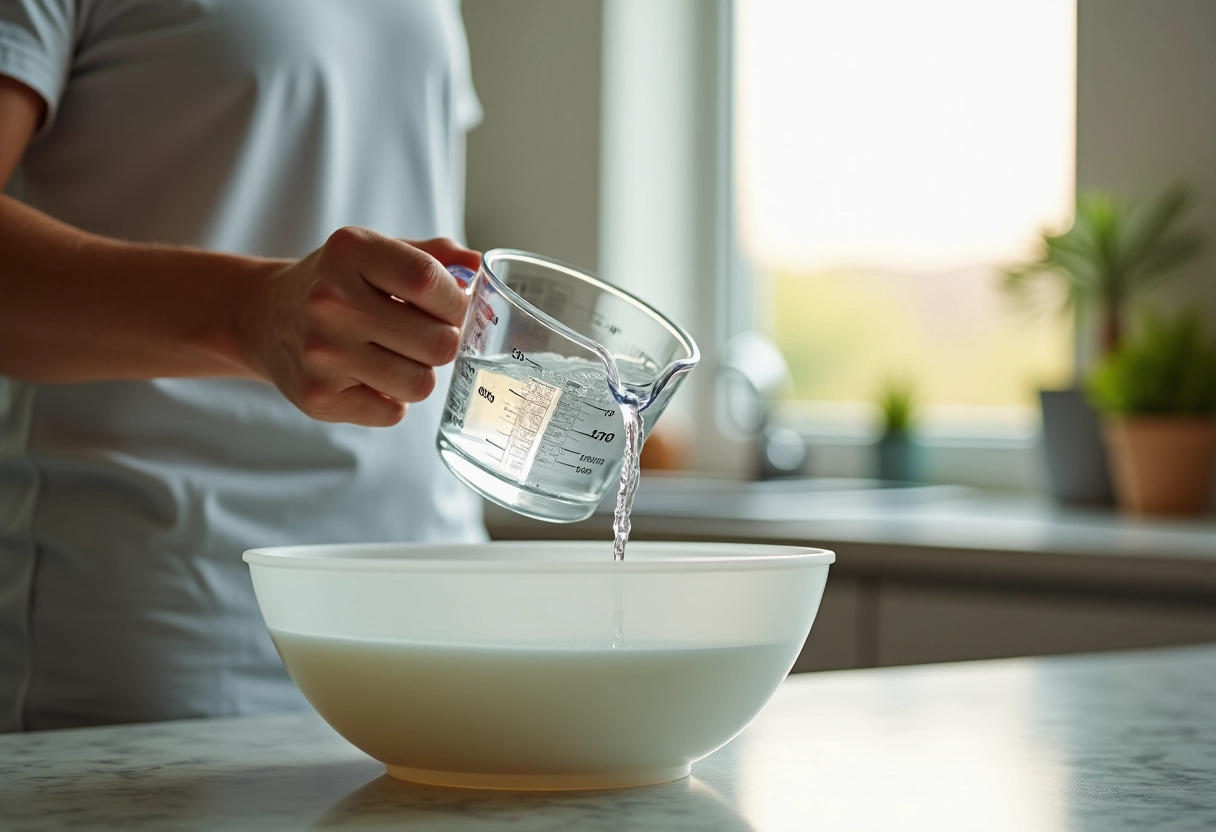
For more precise conversions, use a measuring cup that indicates volumes in milliliters and centiliters. This tool helps you avoid approximations and ensures an exact measurement.
The kitchen scale with an automatic conversion function is another useful tool. By weighing liquids, you can achieve a precise conversion in milliliters, even for non-standard volumes.
Additional Tips
When converting, remember to:
- Consider the density of liquids. For example, oil is denser than water.
- Use standardized measuring utensils to avoid errors.
By following these tips, you will master the conversions from centiliters to milliliters, ensuring the accuracy of your recipes.