
The European automotive market is undergoing a rapid restructuring phase, where manufacturers’ product plans, regulatory trade-offs, and changes in insurance costs are reshaping enthusiasts’ priorities. Keeping up with automotive news in 2025-2026 requires deciphering technical and industrial signals that generalist sections tend to overlook.
Cost of claims on electric vehicles: what insurance rates reveal

European auto insurers have reported since 2023-2024 a significant increase in the average cost of claims on recent EVs. The unit price of batteries and the complexity of repairing high-voltage structures are driving compensation amounts higher, even for low-speed collisions.
Direct consequence: insurance premiums are rising faster for electric vehicles than for equivalent thermal vehicles in several European markets. For an enthusiast comparing an electric model to its hybrid counterpart, the insurance cost now deserves as much attention as the list price or the claimed range.
This phenomenon also impacts the used electric vehicle market. A vehicle whose battery has sustained even a minor impact may see its residual value plummet if the insurer deems the repair unprofitable. We observe that this factor is beginning to alter depreciation schedules on resale platforms, and those following auto news on Atlantic News regularly encounter this type of analysis applied to the French fleet.
Plug-in hybrid and full hybrid: why editorial interest is shifting
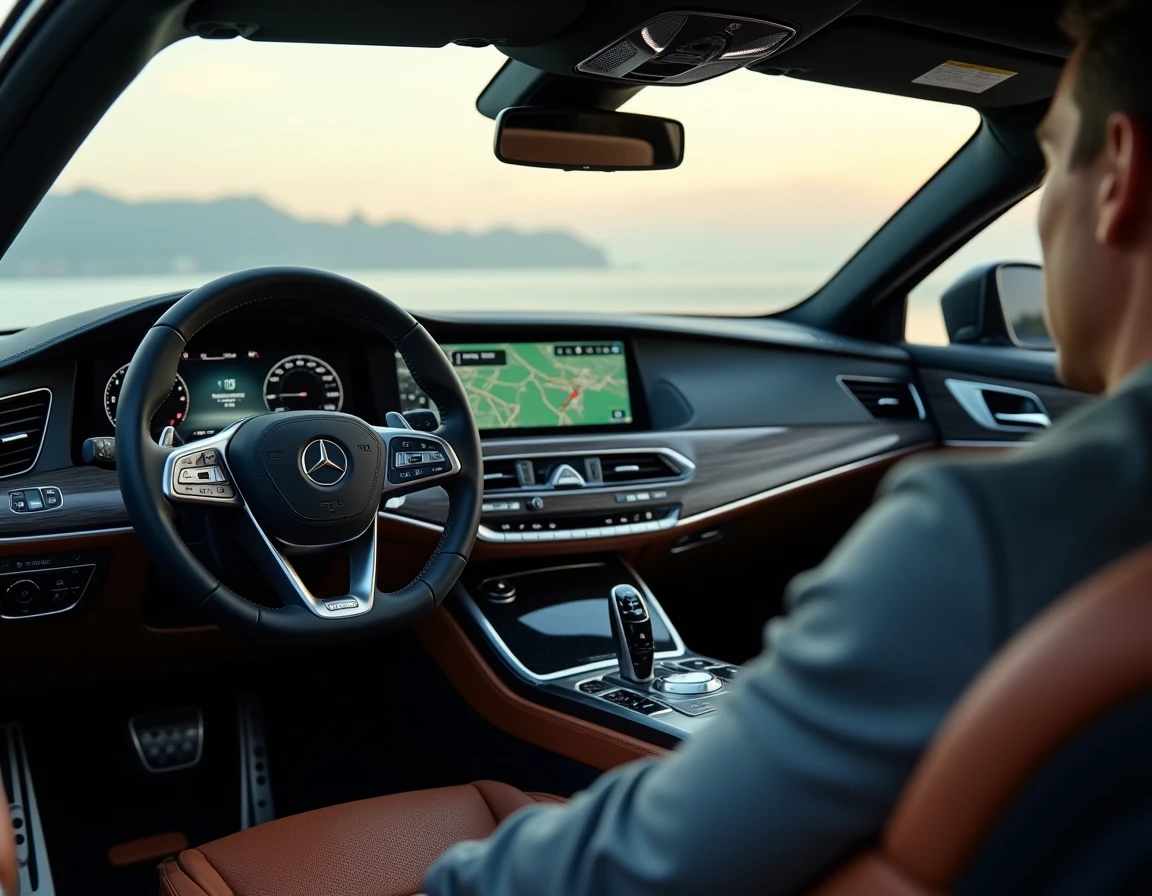
100% electric tests are losing ground in the editorial plans of specialized media. Since early 2024, several European editorial teams have noted a continuous decline in the audience for EV tests in favor of plug-in hybrids and full hybrids. This trend is documented, notably by a traffic analysis published by Auto Motor und Sport in 2024, which was picked up by the European trade press in early 2025.
Reader fatigue around charging constraints partly explains this shift. Regulatory uncertainties regarding purchase incentives amplify the movement: when a bonus can disappear from one quarter to the next, readers seek comparisons that incorporate thermal and hybrid vehicles into the equation.
What this shift means for enthusiasts
Hybrid/thermal comparisons are making a strong comeback in editorial grids, having been marginalized in favor of all-electric content. For the car enthusiast, this is a signal: quality content on hybrid powertrains is multiplying, with more in-depth tests on driving modes, real consumption in mixed cycles, and dynamic behavior in thermal-only mode.
We recommend systematically cross-referencing tests from multiple specialized sources on these powertrains, as the discrepancies between claimed consumption and measured consumption remain highly variable from one model to another.
Electric purchase incentives in Europe: the tightening that changes strategies
Germany, the Netherlands, and Sweden have reduced or tightened their incentives for new electric vehicles in 2024-2025. Registration statistics published by ACEA confirm a notable decline in registrations of passenger EVs since 2024 in these markets.
This reversal is causing a refocusing of purchases on two segments:
- Entry-level electric models, which remain competitive once incentives are reduced, with net prices staying below a psychological threshold for first-time buyers
- Recent used vehicles under two years old, whose initial depreciation partially offsets the loss of bonuses, and which still benefit from manufacturer warranties on the battery
- Plug-in hybrids that capture some of the demand disappointed by pure electric, particularly among drivers regularly undertaking long trips
For the French market, these European movements serve as a leading indicator. Each adjustment of bonuses in a neighboring country modifies import flows and manufacturers’ pricing strategies across the continent.
European industrial sovereignty: the Made in Europe debate and its repercussions
Renault, Stellantis, and Volkswagen Group have sent a joint letter to European lawmakers regarding the “Made in Europe” framework prepared by Brussels. The three manufacturers support the principle of European preference for vehicles and components, but request a relaxation of the proposed criteria, particularly regarding batteries and local content.
At the same time, suppliers from Clifa have proposed seven amendments to strengthen the Industrial Accelerator Act, arguing that the current text insufficiently protects the entire value chain, especially first and second-tier suppliers.
What this implies for upcoming models
If local content criteria are tightened, some models assembled outside Europe or incorporating batteries of Asian origin could lose access to future incentives. For enthusiasts, this means that the origin of components will become as relevant a purchasing criterion as the technical specifications.
In the short term, we observe that manufacturers are accelerating the relocation of certain battery lines to Europe, which could alter delivery times and the configurations available for several models expected in 2026-2027.
Manufacturer recalls and reliability: technical alerts to watch
Stellantis has initiated a recall campaign affecting over 212,700 vehicles equipped with the 1.2 turbo Gen-3 hybrid 48 V engine. The identified defect concerns an insufficient gap between the gasoline particulate filter conduit and an electrical terminal, posing a fire risk. This is not the first recall for this powertrain.
This type of alert serves as a reminder that the complexity of 48 V hybrid architectures multiplies thermal and electrical friction points in the engine compartment. For used car buyers, checking the recall history of a given vehicle becomes as fundamental a reflex as checking the maintenance log.
- Systematically consult the manufacturer’s recall database before any recent used car purchase
- Verify the exact engine version (Gen-2, Gen-3) to identify applicable campaigns
- Request written proof of recall completion from the seller, whether private or professional
The automotive news of mid-2026 is read through these intersecting signals: rising EV insurance costs, restructuring of European incentives, the resurgence of hybrids, and industrial sovereignty issues. It is these technical elements, far more than concept car presentations, that will determine the next purchase of an informed enthusiast.