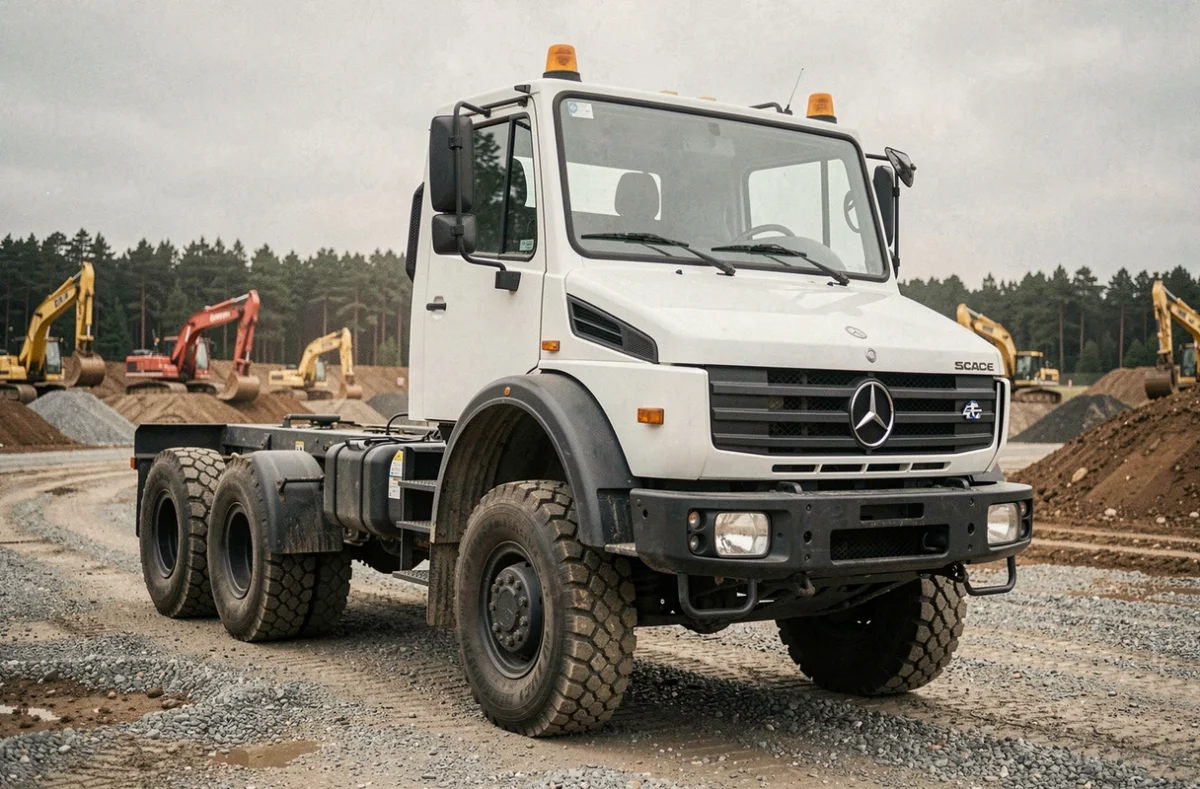
The U 4023 and U 5023 share the same engine, delivering 170 kW (231 hp) and 900 Nm of torque. The price difference between these two new Unimog models therefore has nothing to do with what’s under the hood. It comes down to the chassis design, load ratings and the bodywork options these allow.
Chassis and rated payload: the real price difference between the U 4023 and U 5023
When both vehicles are configured identically (same cab, transmission and tires), the price difference between a U 4023 and a U 5023 is primarily due to the chassis and its rated payload. The U 4023 has a maximum payload of 2.5 tonnes, while the U 5023 can carry up to 4.5 tonnes. This near-doubling requires a reinforced frame, portal axles sized accordingly and suspension calibrated for significantly higher loads.
The gross vehicle weight reflects this difference in design. Depending on the configuration, the U 4023 ranges from 7.5 to 9.8 tonnes, while the U 5023 ranges from 12.5 to 13.0 tonnes. The gap is even wider for gross train weight: 18.7 to 25.7 tonnes for the U 4023, compared with 31 to 34 tonnes for the U 5023.
We recommend requesting a strictly like-for-like quote for both platforms from the Mercedes-Benz Special Trucks configurator. By separating the chassis and load rating from the other equipment, you can clearly see how much of the price difference comes from the vehicle’s structure. For an initial estimate of the price of a new U 4023 Unimog, this approach helps distinguish the chassis premium from the cost of optional equipment.
Dimensions and ground clearance: implications for equipment fitment
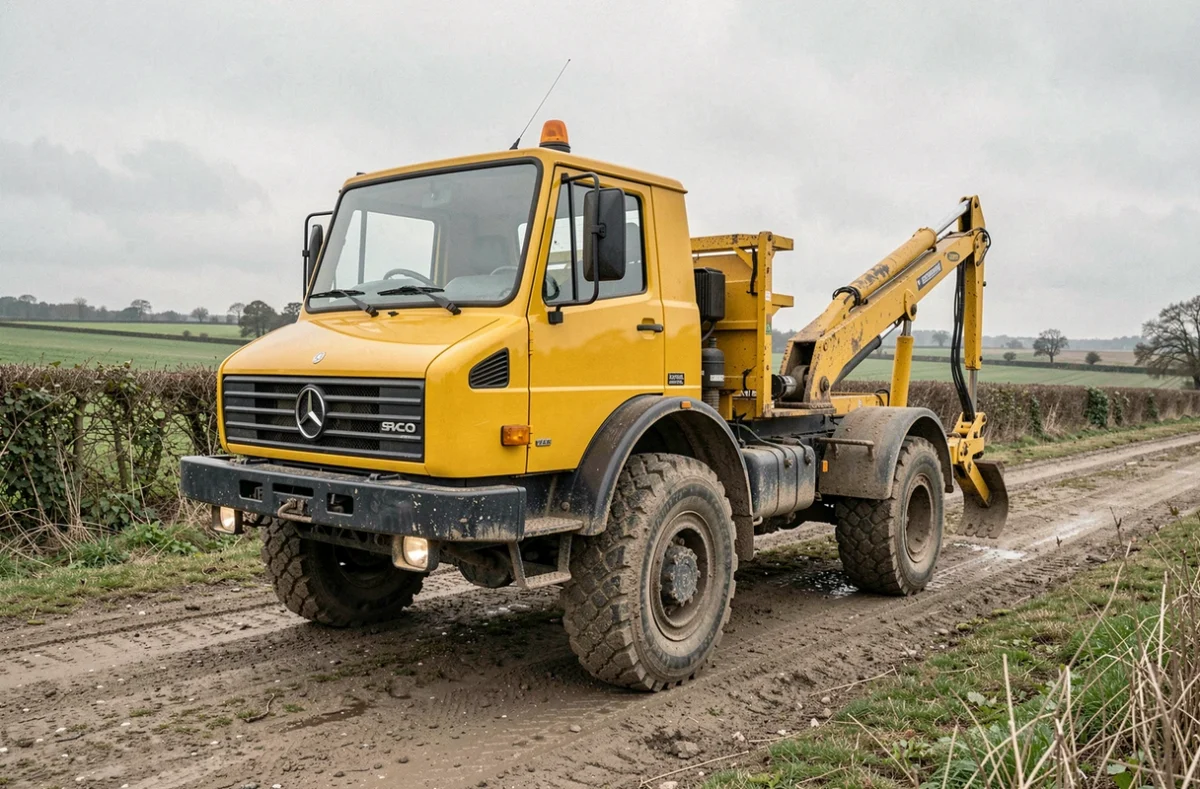
The U 5023 doesn’t just carry heavier loads; it is physically taller. The technical specifications list 460 mm of ground clearance for the U 5023, compared with 410 mm for the U 4023, and an overall height of 2,873 mm versus 2,760 mm. Those extra 50 mm of ground clearance and 113 mm of overall height are significant.
For a bodybuilder fitting a tipper body, snow-clearing equipment or an auxiliary crane, the U 5023’s higher center of gravity affects stability calculations. The design of the rear power take-off mounts and hydraulic interfaces may also differ. Each adaptation required to accommodate the U 5023’s dimensions adds to the final quote.
Access to restricted sites
The U 5023’s extra 50 mm of ground clearance is an advantage on rough terrain, but its overall height of nearly 2.90 m can be an issue beneath certain structures, such as low bridges, forest tunnels and covered parking areas. The more compact U 4023 can fit where the U 5023 requires a prior clearance check.
Gross train weight and towing capacity: choose based on your existing fleet
The U 5023 can tow up to 34 tonnes in gross train weight, one-third more than the U 4023’s upper limit of 25.7 tonnes. This difference affects far more than the vehicle itself: it determines compatibility with the trailers and towed equipment already in service.
An operator using flatbed trailers carrying 8 to 10 tonnes doesn’t need the U 5023’s towing capacity. The U 4023 can handle this requirement with plenty of headroom. By contrast, a local authority towing brine tanks in winter or heavy equipment trailers will quickly exceed the U 4023’s limits.
- The U 4023 is suited to lighter setups: offset mowers, standard snowplows, low-tonnage tipper bodies and trailers for everyday service work.
- The U 5023 is the right choice when payload exceeds 3 tonnes or gross train weight goes beyond 20 tonnes—typically for auxiliary cranes, tanks, tri-axle tipper bodies carrying a full load or heavy equipment trailers.
- The U 5023’s higher price doesn’t buy extra power; it pays for greater structural capacity.
Comparing quotes for new Unimog models: which costs to separate
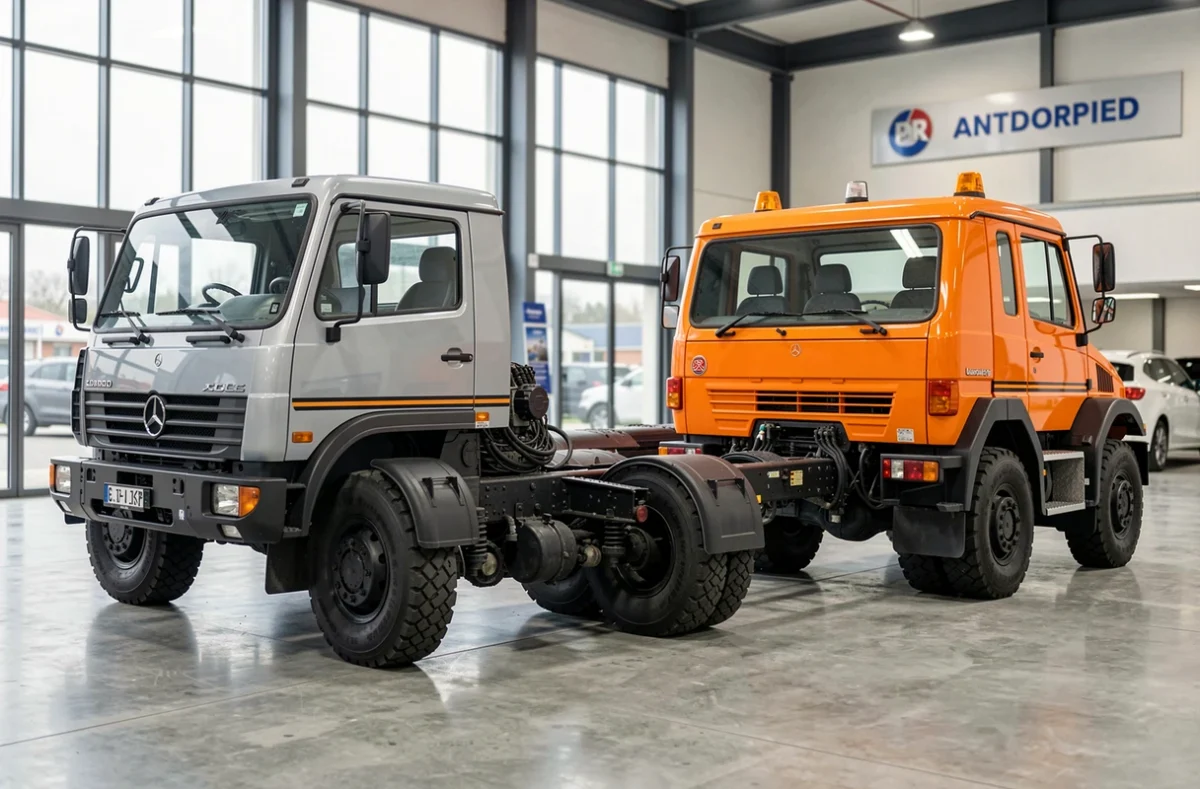
Mercedes-Benz Special Trucks does not publish a public list price for Unimog models. Comparing prices for the U 4023 and U 5023 without a clear method is like comparing two vehicles that have nothing in common but the badge.
A reliable comparison method
To get a meaningful price difference, request two quotes with identical specifications for every item except the chassis:
- Same cab type (short or long, with or without a sleeper berth).
- Same tires (size, tread pattern and brand) and same wheels.
- Same automated transmission and power take-off configuration.
- Same hydraulic equipment (number of circuits, flow rate and pressure).
- Same interior trim level and driver assistance features.
The remaining difference between the two quotes represents the cost of the U 5023’s reinforced chassis, higher load rating and increased ground clearance. Any other difference comes from the options selected, not the model itself.
Total cost of ownership
The purchase price alone doesn’t tell you the true cost of a Unimog. The U 5023 is heavier when unladen and uses more fuel when working in the same configuration. Its larger tires also cost more to replace. On the other hand, its greater versatility may reduce the number of vehicles needed in a municipal or business fleet.
The choice between the U 4023 and U 5023 rarely comes down to a difference in list price alone. It depends on how well the vehicle fits into the wider fleet, the work it will be expected to do and its intended service life. A well-configured U 4023 can handle most routine road and landscape maintenance tasks. The U 5023 is only justified when the U 4023 reaches its documented payload or towing limits.